

 33
Progress Report on SDG 5: Gender Equality for Academic Year 2025-2026
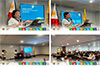
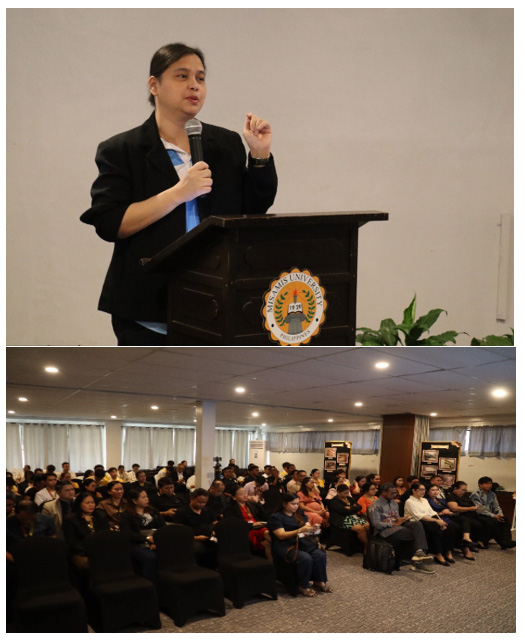
The report on SDG 5: Gender Equality was presented by Mrs. Judy Jane Revelo, Director of
Human Resource Department at Misamis University, on October 30, 2026, during the 17 UN
Sustainable Development Goals (SDG) Validation. Participants included deans, administrators,
faculty members, students, stakeholders, alumni, and guests from the Department of
Environment and Natural Resources Provincial Office, the Department of Agriculture-Ozamiz
City, the Disaster Risk Reduction and Management Office (DRRMO)-Ozamiz City, the
Economic Enterprise Development Office (CEEDO)-City Government of Ozamiz, the Tourism
Office-Ozamiz City, and provincial and city libraries. The event was held at the Function Hall on
the Misamis University campus in Ozamiz City.
The overall report is as follows:
Advancing women’s access and participation
Misamis University reports a university-wide commitment to gender equality through its Revised
Guidelines on Promoting Women’s Empowerment and Gender Equality. Created in 2020 and
reviewed in 2026, the guidelines apply across the University and support gender
mainstreaming, non-discrimination, and equitable access to education.
The University uses an automated Enrollment Management System to track women’s
applications, admissions, and entry into academic programs. Of 1,789 students starting a
degree, 894 were women (about 50.0%). Among new entrants, 63 were first-generation
students, including 43 women. The University reports providing mentoring and scholarship
access, with 1,499 women making up 51.25% of the 2,925 scholars in the first semester of
School Year 2026–2027.
The University also encourages women to pursue subjects where they are underrepresented,
including science and engineering. Its guidelines call for incentives for academic units that
attract and support women in these fields and use sex-disaggregated data to monitor STEM
graduation rates.
Women’s representation in staffing and graduation
The workforce consists of 462 employees, including 255 academic staff. Of 32 senior academic
staff, 18 are women, representing approximately 56.3%.
The University reports 1,114 graduates, of whom 715 were women (about 64.2%). Women
accounted for 294 of 459 STEM graduates (64.1%), 35 of 42 medicine graduates (83.3%), and
386 of 613 Arts, Humanities, and Social Sciences graduates (63.0%). These figures provide a
useful snapshot of women’s participation across fields.
Policies and support for inclusion
The University reports policies prohibiting discrimination against women and transgender
people, both reviewed in 2026. It also monitors women’s and men’s academic progression and
graduation outcomes to identify potential gaps and guide support measures.
Further, it reports providing 105 days of maternity leave in accordance with Philippine law, free
childcare facilities for students and staff, and women’s mentoring schemes. Its guidelines
establish complaint and redress mechanisms, assistance for affected individuals, and protection
against disadvantage for people reporting discrimination. MU also recognizes paternity leave as
a way to support shared childcare responsibilities.
Overall assessment
Misamis University reflects a broad institutional approach to SDG 5, combining gender-related
policies with admissions monitoring, scholarships, mentoring, childcare, leave provisions, and
tracking of academic outcomes. Women represent about half of new degree entrants and a
majority of reported graduates, scholarship recipients, and senior academic staff.

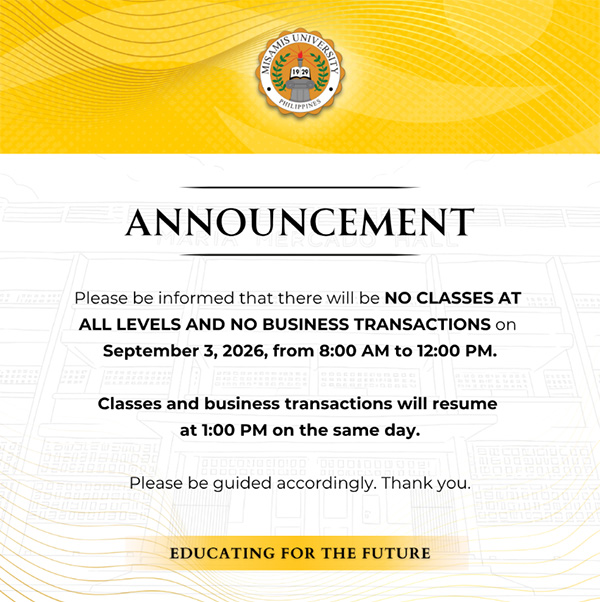
Announcement
|
|
|
Photo Gallery
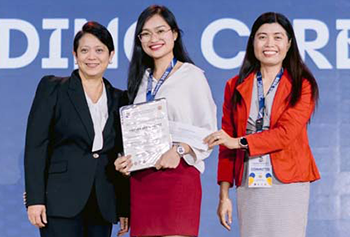 International Conference on Social Sciences 2026 |
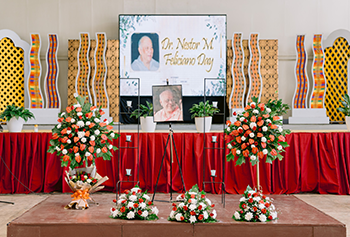 DR. NESTOR M. FELICIANO DAY |
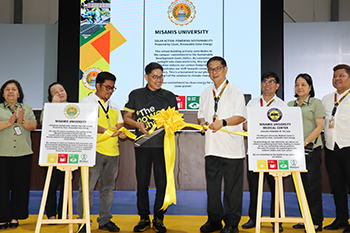 Turnover of solar energy management from WEGEN to MU |
Videos

|

|

|