

 41
"I CARE": MU Strengthens Sustainability and Community Partnerships during the Nestor Feliciano Day 2024
As part of a bigger community, Misamis University demonstrates its role in the community as an academe by implementing projects and partnerships that protect the environment, engage youth and professionals in literacy and life-long learning, advocate for sanitation and healthy lifestyles, and generate livelihood. Misamis University addresses global issues aligned with the Sustainable Development Goals set by the United Nations because MU takes pride in its values of “I-CARE”: innovation, compassion, adaptability, responsibility, and excellence.
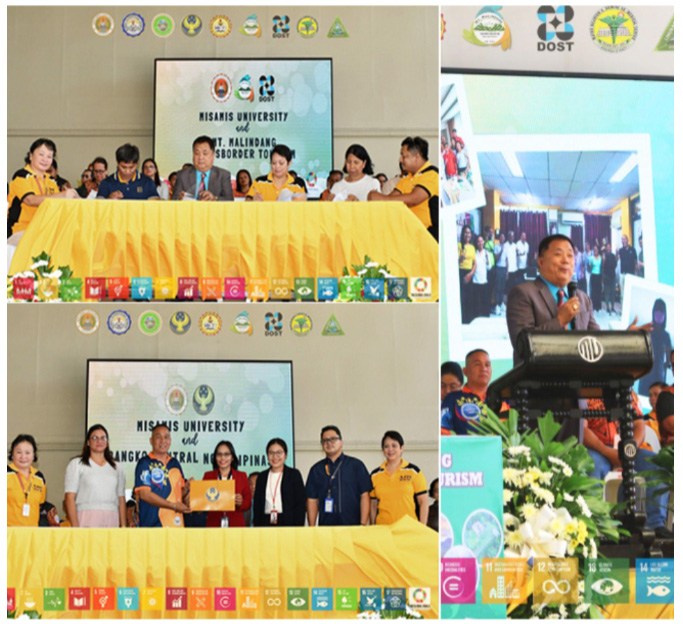
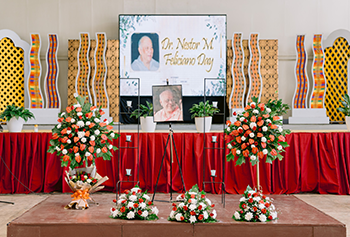
The university celebrated Nestor Feliciano Day on November 14, 2024. It was a day to honor the late university president (1984 to 2006). The Misamis University Community Extension Program (MUCEP) was established in 1977 during his leadership to organize extension activities. The office initiated a ceremonial Memorandum of Agreement branded as the Partnerships for Sustainable Development. Misamis University penned a collaboration with Mt. Malindang Tourism Federation, Bangko Sentral ng Pilipinas, Misamis Annex Integrated School, Mayor Hilarion A. Ramiro Sr. Medical Center, Linusas-Laburak Cooperative, Barra Elementary School, and Barra Barangay Council.
Mt. Malindang Tourism Federation Mt. Malindang Crossborder Tourism (MMCBT) encompasses tourism sites from Misamis Occidental, Zamboanga del Sur, and Zamboanga del Norte. This partnership stemmed from one of the outcomes of the Department of Science and Technology PCIEERD project implemented by MU known as the Research-Based Capacity Building on Science Communication for an Ecologically Adaptive Tourism Management Contingent to Mt. Malindang Range Natural Park, Misamis Occidental. This partnership will be an avenue to promote and protect Mt. Malindang Range Natural Park through educational field trips, IEC/CEPA materials, policy options, research, and extension activities.
"Ang iba, they are so proud that they've been to other places, dapat tayo, dito muna. We assure you very beautiful itong mga spots. Atong destinations more beautiful. Ako, I've visited other countries pero hindi matatalo ang view, falls… blessed talaga tayo that in one hour pwede na pumunta…" Atty. Orlando M. Salatandre, MMCBT Federation President, encouraged the audience to visit the tourist spots. The federation plans for an update on their tour packages which will be released on their official Facebook page Mt. Malindang Crossborder Tourism.
The federation's tourism site owners joined the celebration with the presence of Mrs. Ladelle Tagiobon (TESPI Farm, Gala Ozamiz City); Mr. Dale Chua and Mrs. Lurielle Chua (BuKids Resort, Sergio Osmeña); Ms. Romelee Kaye M. Garcia and Mr. Borge Garcia (Mabanag Spring Resort, Mahayag); Bong Bomediano (Gantaw Hills Flower Garden, Sergio Osmeña); and Atty. Orlando M. Salatandre Jr. (Villa Pablea Mountain Resort, Rizal).
Bangko Sentral ng Pilipinas (BSP)
Ms. Rayna Mae S. Baulite, BSP Assistant Bank Manager, remarked "Do you know why this partnership with
Misamis University is special to us? M stands for mutual trust in creating a meaningful and positive impact,
leveraging network… which brings us closer to the people. U is for unwavering commitment and collaboration
which promotes growth and learning especially in promoting BSP’s initiative for financial inclusion while also
affirming our dedication to making someone’s life better."
Bangko Sentral ng Pilipinas' Employees' Welfare Committee reached out to Misamis University to collaborate with extension activities. With this affiliation, BSP will be one with MU, through the College of Business and Management, in giving technical assistance to micro-business beneficiaries for its flagship extension program Negosyo sa Kariton (NegoKart). It aims to assist small business owners in financial management (e.g. bookkeeping), marketing, and food handling.
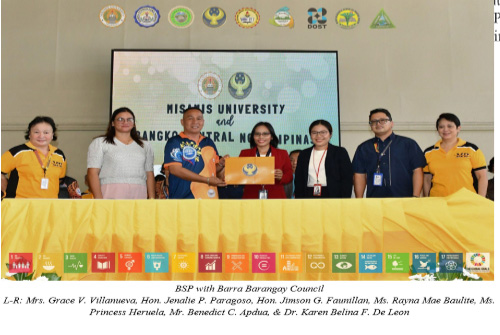
BSP also commits to participating in environmental activities such as tree growing and coastal clean-up to MU partner communities like Barra and the MU CARES (Misamis University Center for Advocacy, Research, and Extension Services) Facility in Hoyohoy, Tangub City. On the same day, BSP also turned over an amount of money to help build communal toilets for Barra.BSP also commits to participating in environmental activities such as tree growing and coastal clean-up to MU partner communities like Barra and the MU CARES (Misamis University Center for Advocacy, Research, and Extension Services) Facility in Hoyohoy, Tangub City. On the same day, BSP also turned over an amount of money to help build communal toilets for Barra.
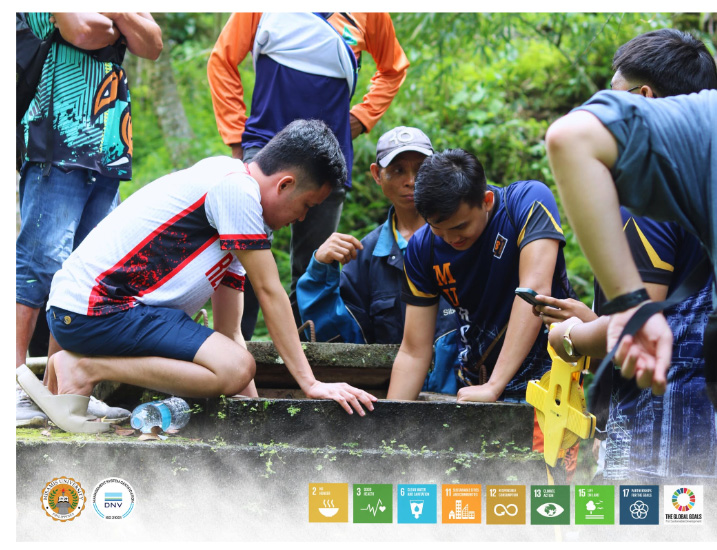
Misamis University and LILAC Strengthen Partnership Through Water System Assessment
Continuing the partnership and collaboration, the Linusas-Laburak Cooperative (LILAC) and Misamis University's College of Engineering and Technology and Misamis University College of Medical Technology conducted joint extension activities through a cumulative inspection, monitoring, and an assessment of water quality and pipes in Barangay Stimson Abordo, Ozamiz City on December 3, 2024. Faculty, staff, and students of MU and the LILAC Board of Directors participated in the community engagement. LILAC was established in 2008 as a component of the Save Labo River Project (SLRP), an initiative spearheaded by Misamis University in collaboration with the DENR and CARE Philippines' AWESOME project. Funded by the Philippines–Australia Community Assistance Program (PACAP) under the Australian Agency for International Development (AusAID), the cooperative was created to supply water to the upland barangays of Ozamiz City. Chairman Edilbrando P. Camelotes, General Manager Aurelio S. Pacyao, and several LILAC Board of Officers facilitated the team’s visit to the community water source. The group embarked on a challenging two-hour trek to reach the location to demonstrate their shared commitment to ensuring the water system's functionality and sustainability.
Engr. Murphy Saumat, Community Extension Program Coordinator and faculty member of the MU College of Engineering and Technology, led the site inspection, monitoring, and assessment. The inspection focused on identifying water system leakages and assessing areas, including pipes, for potential repairs. The group also measured the water capacity of the tanks. Simultaneously, Ms. Aiko Billiones, RMT, the Community Extension Program Coordinator of the College of Medical Technology, led the water quality assessment to ensure the safety of the local water supply for the consumers. She was assisted by CMT faculty and students in collecting water samples for the analysis. Equipped with the necessary tools and expertise, the team further analyzed the water samples at the MU Molecular Biology (MolBio) Laboratory. True to its dedication as an academic institution striving to enhance the community, this collaborative effort underscores Misamis University's commitment to addressing the community's need for technical assistance. This highlights the university's effort in promoting public health and addressing pressing infrastructure challenges.
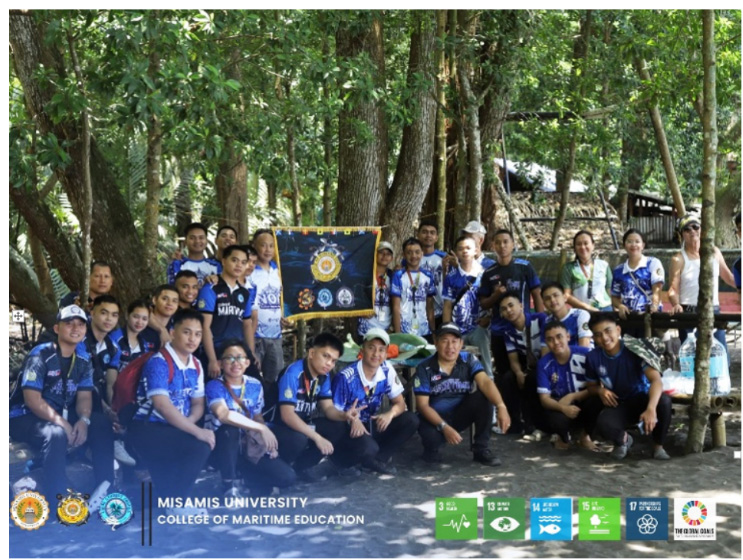
The College of Maritime Education (CME) of Misamis University spearheaded another coastal clean-up activity in Barangay Barra, Tudela, Misamis Occidental, as part of the Coastal Resources Regeneration and Alternative Livelihood (CORRAL) Program last April 18, 2026.
The activity was strengthened by the active participation of the MU CME Local Student Council led by Governor Ejay Napat, and student organizations : Marine Engineering Technological Association (META) and Nautical Odessey Allegiance (NOA) together with the strong support of the Barangay Council of Barra and community members. The collective efforts between community and the college demonstrated the importance of collaboration and volunteerism in protecting coastal ecosystems and promoting sustainable communities. The initiative contributes to the following United Nations Sustainable Development Goals (SDGs): SDG 13 (Climate Action), SDG 14 (Life Below Water), & SDG 15 (Life on Land). Beyond removing waste from the coastal environment, the activity provided maritime students with an opportunity to practice environmental stewardship, community engagement, and civic responsibility. It also highlighted the role of university extension programs in translating environmental awareness into meaningful community action
Promoting Sustainable Livelihood through Hydroponics
On the same day, the CME also conducted a follow-up mentoring session on the hydroponics system previously established and donated to the community by the College of Agriculture & Forestry (CAF) of Misamis University. The hydroponics initiative addresed to the challenge of limited arable soil in coastal communities by providing an alternative method for growing vegetables. As part of the livelihood component of the CORRAL Program, the activity aims to strengthen food security, income-generating opportunities, and sustainable agricultural practices among community members. In this regard, the initiative contributes to SDG 1 (No Poverty) by supporting sustainable livelihood opportunities and enhancing the capacity of community farmers, and SDG 2 (Zero Hunger) by promoting local food production and improved access to nutritious vegetables.
2/M Joenil Catingub provided hands-on mentoring to Mr. Romeo “Boboy Contrias, assigned by Hon. Jimson Faunillan as in-charge of the hydroponics system in Barra and the community member responsible for managing the donated hydroponics setup. The mentoring focused on the proper preparation and ratio of hydroponic nutrient solutions for short-term crops such as pechay, radish,tomato, eggplant and ampalaya. Through initiatives that combine coastal environmental protection, sustainable agriculture, and community capacity-building, Misamis University continues to demonstrate its commitment to sustainable development and meaningful university community partnerships
Misamis University’s Commitment to Aquatic Ecosystem Conservation and Sustainable Resource Management
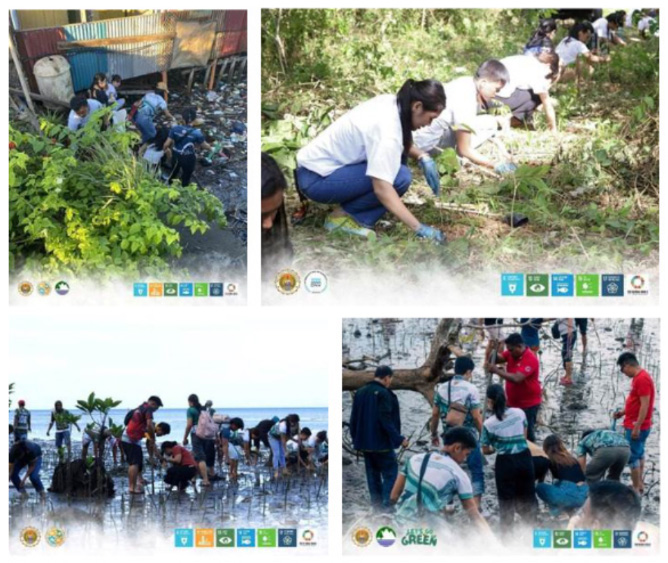
Misamis University (MU) demonstrates commitment to protecting and restoring oceans, coasts, rivers, and freshwater resources through education, research, community engagement, and multi-stakeholder collaboration. Across its academic, outreach, and scientific programs, the university advances evidence-based conservation initiatives that strengthen aquatic ecosystem health and resilience in Misamis Occidental and the larger Zamboanga Peninsula. MU implements diverse activities that promote environmental awareness and collective action for coastal and freshwater protection. Long-running initiatives such as the Coastal Resource Regeneration and Alternative Livelihood (CoRRAL) Project, the Ecological Strengthening Through Environmental Rehabilitation and Orientation (ESTERO) Program, the DILG-funded Sustainable Land Management (SLM) Project in Baybay, Bonifacio, and the AusAID-funded Save Labo River Program (SLRP) provide environmental education sessions, mangrove planting, coastal clean-ups, watershed conservation activities, and community capacity-building. The university also develops and disseminates IEC materials, including flip tarps, environmental modules, and other awareness tools, to strengthen public understanding of freshwater and marine conservation issues.
Complementing these programs are pollution-reduction initiatives such as the turnover of a community composting facility under the SLM Project and the installation of trash traps along Carangan Creek under the ESTERO Program. These interventions reduce land-based waste that would otherwise flow into rivers and coastal areas, directly supporting the rehabilitation of affected waterways. MU has also institutionalized a university-wide policy prohibiting the selling, serving, or purchasing of endangered, threatened, or protected marine species in all campus food outlets, reinforcing its commitment to sustainable consumption and biodiversity protection.
The university actively contributes to international and national environmental engagements. It has initiated activities as part of the World Migratory Bird Day – supported by the East Asian–Australasian Flyway Partnership (EAAFP) – including lectures, IEC development and distribution, coastal clean-ups, and bird-watching activities that highlight the importance of wetland and coastal habitats. MU also mobilizes faculty, students, and partner communities during the International Coastal Clean-up (ICC) Day and marks World Water Day through large-scale tree-growing activities, including the planting of 500 Narra seedlings for watershed rehabilitation. In addition, the University celebrates the International Day for the Conservation of the Mangrove Ecosystem and the Month of the Ocean by organizing mangrove planting and coastal clean-ups that restore vital coastal habitats and deepen community awareness of marine conservation.
Beyond coastal areas, MU continues to support freshwater ecosystem management through the Save Labo River Program. Originally funded by AusAID, this initiative focuses on restoring the Labo Watershed and has led to the establishment of a community-managed water system benefiting seven upland barangays. MU continues to assist the Linusas Laburak Cooperative (LILAC), which now oversees the operation and maintenance of this vital water system. Strong partnerships further amplify MU’s conservation efforts. The University collaborates with LGUs, national government agencies, international partners, and local communities to rehabilitate degraded water bodies and restore coastal and freshwater ecosystems. Through the ESTERO Program with DENR and LGU Ozamiz, MU continues to help reduce pollution in urban waterways. The University’s partnership with AusAID under the Save Labo River Project has produced long-term benefits in watershed rehabilitation and community-based water management. MU also strengthens conservation knowledge through coastal biodiversity studies, including published works on mangrove species diversity and coastal environmental conditions along Panguil Bay, such as:
* Diversity of Mangrove Species Along Panguil Bay, Ozamiz City, Mindanao Island, Philippines (Villanueva et al., 2021); and
* Coastal Environment and Marine Resources Conditions in Ozamiz City, Philippines (Galindo et al., 2022).
MU conducted a Management Effectiveness Assessment (MEA) in the Baliangao Protected Landscape and Seascape (BPLS), facilitated the creation of the BPLS Protected Area Management Plan (PAMP) and BPLS Ecotourism Management Plan (EMP), and continues to conduct resource assessments covering water quality, mollusks, coral reefs, seagrasses, and mangrove habitats. These scientific activities provide LGUs and communities with reliable data to guide policy-making, conservation planning, and ecosystem restoration. Further contributing to regional ecosystem governance, MU actively participates in the Iligan Bay Alliance in Misamis Occidental (IBAMO) and the Panguil Bay Development Council, and serves as Sub-Committee Chair for IEC of the BPLS Protected Area Management Board (PAMB). Through these roles, the University provides technical expertise, research support, and community-based insights essential for collaborative resource management.
MU’s science-driven approach is further enhanced through the DOST–PCAARRD-funded project on the Management Effectiveness and Impact of Locally Managed MPAs in the Zamboanga Peninsula. This initiative employs advanced technologies, including GIS mapping and the use of Coral Point Count with Excel Extension (CPCe) software for coral cover analysis, enabling more precise and standardized assessment of reef conditions. By generating accurate ecological data that inform planning, monitoring, and decision-making, CPCe strengthens the project’s capacity to evaluate ecological, economic, and social impacts of MPAs. The project provides capacity-building, policy recommendations, and technical tools that help coastal communities and marine industries minimize environmental damage and adopt sustainable practices.
Through integrated education, research, community outreach, and strong regional and national partnerships, Misamis University demonstrates a clear and measurable contribution to the conservation and sustainable management of aquatic ecosystems. Its wide-ranging initiatives reflect a comprehensive institutional commitment to safeguarding marine and freshwater resources, supporting local communities, and advancing both national and global environmental goals.
Stitches of Progress: Misamis University’s BAGUIDA Brings New Sewing Machines and Learning Support to Barangay Guimad
On October 17, 2025, the women of Barangay Guimad in Ozamiz City received more than new equipment—they received renewed confidence that a livelihood passed down through generations will continue to thrive. Through Misamis University’s Barangay Guimad Integrated Development Approach (BAGUIDA), brand-new sewing machines were formally turned over to local women whose tailoring work has long helped sustain their families.
A Tradition Renewed
For decades, the women of Guimad have relied on sewing as both a source of income and a meaningful expression of skill, resourcefulness, and community identity. Yet their old machines—worn down by years of constant use—had begun to limit what they could produce and how efficiently they could work. The turnover of new sewing machines addressed this need directly. By replacing aging equipment, BAGUIDA helped ensure that the community’s historical craft would not fade with time, but instead continue with greater reliability and productivity.
University-Led Facilitation
The activity was facilitated by Mr. Catalino L. Emperio III, Community Extension Coordinator of Misamis University’s College of Arts and Sciences, whose role helped bring the university’s extension program directly to the beneficiaries. He was joined by College Dean Dr. Haydee D. Villanueva; English Department Program Head and Chairman Ms. Juvy H. Vallejo; Natural Sciences Department Program Head Dr. Nelfa Canini; and Social Work Department Program Head Ms. Kasey Jane B. Buac. Faculty member Ms. Hanzen Tomatao also took part in the outreach, alongside personnel from the Misamis University Community Extension Program and other faculty members from the Social Sciences, Natural Sciences, and English Departments. The turnover was also facilitated by the members of the Local Student Council of the College, headed by its Governor, Gov. Robelyn B. Atig
Support for Young Learners
The outreach extended beyond the women’s livelihood program. The College also distributed school supplies—including notebooks and English grammar books—to the students of Guimad Elementary School, giving young learners additional tools for their studies and language development.
For the students, the notebooks offered everyday support for writing, note-taking, and classroom participation, while the English grammar books strengthened access to learning materials that can help build stronger communication skills. The donation reflected BAGUIDA’s integrated approach: supporting not only livelihood and economic resilience, but also education and the long- term development of the community’s youth.
Empowering Rural Women
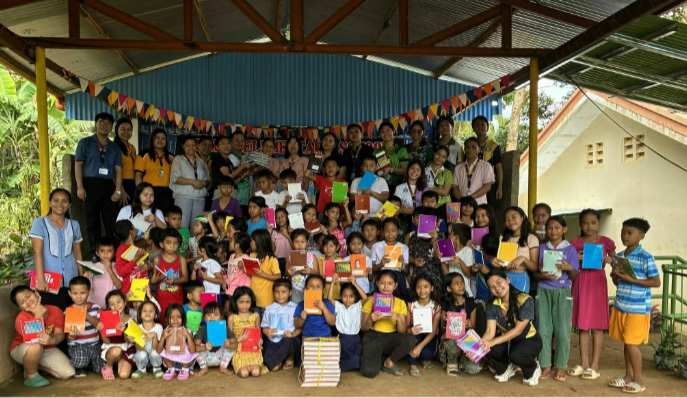
For the women beneficiaries, the machines represent an opportunity to strengthen a livelihood that supports household income, family needs, and local economic resilience. With dependable equipment, they can continue producing quality tailored goods while preserving a craft that has defined their community for generations. Misamis University has long positioned community extension as part of its institutional identity. Its Community Extension Program continues to connect the university with surrounding communities through initiatives implemented by its colleges and departments, including BAGUIDA.
More Than Machines
While the turnover centered on sewing machines, its deeper value lies in what they make possible: continued employment, preserved skills, stronger family livelihoods, and greater self-reliance for women in a high-elevation village. Together with the school supplies given to Guimad Elementary School students, the activity showed that community development grows strongest when it invests in both present livelihoods and future learners. Each stitch made with the new machines carries forward a story of perseverance. What began as a practical turnover became a reaffirmation that rural women’s work matters—and that with the right support, tradition and progress can move forward together.
SUBURBAN COMMUNITY GARDENING: TEAMNABANGAY GULAYAN SA BARANGAY BARRA PROJECT
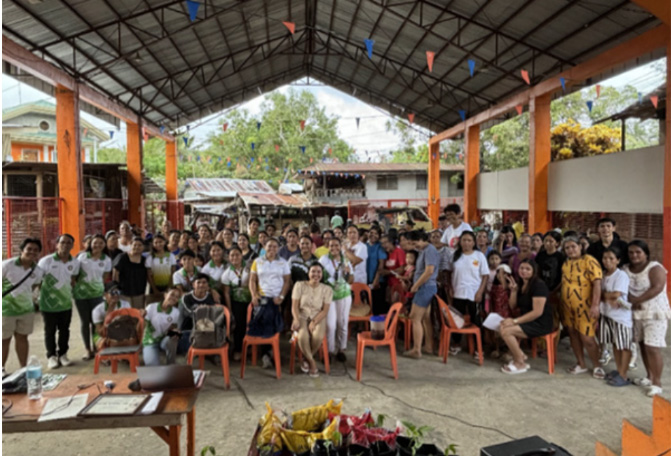
The College of Agriculture and Forestry (CAF) of Misamis University, through its Community Development Program (CDAP), formally launched the Suburban Community Gardening: Teamnabangay Gulayan sa Barangay Project on November 24, 2024, at the Barangay Barra Covered Court in Tudela, Misamis Occidental. Anchored on the university’s community extension mandate and aligned with global frameworks such as the United Nations Sustainable Development Goals (SDGs)—particularly No Poverty, Zero Hunger, Good Health and Well-Being, Decent Work and Economic Growth, Climate Action, Life on Land, and Partnerships for the Goals—the initiative represents a strong commitment to promoting community resilience through sustainable agriculture.
The project is implemented under a Memorandum of Agreement (MOA) between Misamis University and Barangay Barra, emphasizing a shared responsibility in agricultural capacity-building and the establishment of community gardens. With 80 participants, including 4Ps beneficiaries, women’s associations, senior citizens, BPATs, and barangay leaders, the program addresses pressing challenges related to malnutrition, rising food prices, limited livelihood options, and the underutilization of available backyard spaces. Through technical training, practical demonstrations, and distribution of seedlings, tools, and educational materials, the project aims to empower local families to grow their own food and reduce household expenses
During the launch, barangay officials, and CAF student leaders welcomed the community, highlighting how suburban gardening, vertical farming, and organic fertilizer production can transform household food production. Resource speaker Ms. Junalyn M. Uy, a BS Agriculture student, led the technical sessions, covering topics such as sustainable suburban gardening, composting, and Fish Amino Acid (FAA) production. Participants were actively engaged during the assessment, facilitated by Ms. Leah Reyes, where tokens were awarded to individuals who demonstrated outstanding learning. To support immediate implementation, the College distributed 150 potted seedlings (tomato, eggplant, and string beans), five sacks of potting mix, gardening tools, sprayers, and 100 leaflets on vertical gardening and FAA preparation. These resources enable families to begin planting at home, while also encouraging collective participation in developing the community garden. The project team, faculty, and student volunteers ensured a collaborative environment, providing food packs and acknowledging the dedication of all partners involved.
The initiative has already produced substantial outputs, including the establishment of a pilot community garden and increased knowledge among participants about organic and space-efficient gardening. In the short term, households have begun planting the distributed seedlings, gaining improved access to fresh vegetables and developing stronger unity within the barangay. Medium-term impacts include reduced food expenses, emerging micro-livelihoods, improved dietary intake, and wider adoption of vertical gardening practices among households with limited space.
In alignment with the SDGs, the project strengthens poverty alleviation through food self-sufficiency (SDG 1), enhances food security and nutrition (SDG 2), promotes pesticide-free and healthy eating practices (SDG 3), creates opportunities for small-scale agricultural enterprises (SDG 8), fosters climate-resilient agriculture (SDG 13), supports sustainable use of land and biodiversity (SDG 15), and demonstrates effective university-community partnership (SDG 17). The Teamnabangay Gulayan sa Barangay Barra Project is a testament to how academic institutions can synergize with local governments to build more food-secure, environmentally responsible, and economically empowered communities. As monitoring continues, Misamis University commits to sustaining this partnership and expanding agricultural extension services to ensure long-term community transformation.

Announcement

|
|
|
Photo Gallery
 International Conference on Social Sciences 2026 |
 DR. NESTOR M. FELICIANO DAY |
 Turnover of solar energy management from WEGEN to MU |
Videos

|

|

|