

 27
Misamis University's Policy and Practices Against Forced Labor, Modern Slavery, Human Trafficking, and Child Labor
Misamis University maintains an institutional policy that strictly prohibits forced or compulsory labor, modern slavery, involuntary servitude, debt bondage, human trafficking, and unlawful child labor throughout its operations and relevant business relationships. The University recognizes every individual’s right to freely choose employment, receive fair compensation, work under safe and humane conditions, retain freedom of movement, and leave employment in accordance with the law and the employment contract. No employee, student worker, trainee, intern, contractor, or other person performing work for the University shall be subjected to threats, violence, deception, intimidation, abuse of authority, movement restrictions, withholding of wages, confiscation of personal documents, recruitment debt, forced overtime, or any other practice intended to compel labor against free will.
The policy is anchored in the University’s Philosophy, Vision, Mission, Goals, and Objectives, particularly its commitments to Integrity, Compassion, Inclusivity, Responsibility, and Excellence. It is further supported by the Manual on Governance, Administrative Handbook, Faculty Handbook, procurement and supplier-management procedures, student internship and work-immersion guidelines, and the ISO 21001:2018 Educational Organizations Management System. Through these frameworks, the University integrates respect for human dignity and decent work into recruitment, employment, student activities, procurement, contracting, outsourcing, partnerships, and community engagement.
The University’s commitment is consistent with the 1987 Philippine Constitution and Republic Act No. 9208, as amended. These laws prohibit involuntary servitude in any form, except as punishment for a crime after lawful conviction, and trafficking in persons for forced labor, slavery, involuntary servitude, and debt bondage. They also cover recruitment, hiring, transportation, transfer, harboring, or receipt of persons through threats, force, coercion, fraud, deception, abuse of authority, or abuse of vulnerability for purposes of exploitation.
Misamis University also complies with Republic Act No. 7610, as amended, which provides special protection against child abuse and exploitation and seeks to eliminate the worst forms of child labor. These prohibited forms include slavery, trafficking, debt bondage, forced or compulsory labor, use of children in illegal activities, and work that is hazardous or harmful to their health, safety, morals, dignity, development, or education.
Employment at Misamis University must be entered into freely and voluntarily. Before appointment, applicants undergo the prescribed application, interview, qualification verification, and background validation processes. The University verifies identity, age, educational qualifications, professional eligibility, and employment history through authentic and verifiable records. These may include a birth certificate or another lawful proof of age and identity, transcript of records, diplomas, professional licenses, employment certificates, and appropriate clearances. This process prevents identity fraud, illegal recruitment, employment of persons below the lawful working age, and other conditions that could expose an applicant to exploitation.
The University does not employ children below the lawful working age. It will not appoint any applicant to a position without proper age and identity verification. If a lawful exception involving a minor could apply under Philippine law, it must undergo prior legal and institutional review, secure all required permits and parental or guardian participation, and comply strictly with statutory limits on hours, conditions, safety, health, education, and supervision. No minor may be assigned hazardous, excessive, night, exploitative, morally harmful, or education- disrupting work.
Student internships, apprenticeships, practicum assignments, student-assistance programs, work immersion, on-the-job training, volunteer work, and similar educational activities must have a legitimate learning purpose and clear limits. They must not conceal regular employment, obtain unpaid labor unrelated to learning outcomes, or coerce or exploit students. Each activity must have documented learning objectives, defined duties, appropriate supervision, reasonable schedules, safety controls, and a designated faculty or institutional coordinator. Participation must be voluntary and consistent with applicable academic and legal requirements, and student work must remain limited to educational purposes, defined time commitments, and clearly separated learning tasks.
Employees receive written, understandable information about their position, duties, employment status, salary or wage, working hours, benefits, deductions, applicable policies, and procedures for resignation or termination. The University pays salaries and authorized benefits accurately and on time and does not withhold wages to compel continued service. Employees retain possession and control of their passports, licenses, identification cards, certificates, and other personal documents. Original documents may be examined for verification but shall not be confiscated or retained to restrict movement or the ability to leave employment. The University does not charge applicants or employees recruitment, appointment, processing, or placement fees for direct employment. No University official or employee may demand money, gifts, services, favors, or other consideration in exchange for employment, appointment, promotion, deployment, or continued work. When a recruitment agency or another intermediary is lawfully used, the University shall engage only properly licensed entities and require compliance with applicable Philippine rules on recruitment fees, documentation, employment contracts, and worker protection. The University does not shift recruitment costs to applicants or employees.
The policy applies to regular, probationary, fixed-term, part-time, contractual, project-based, temporary, visiting, and international personnel. It also applies, as appropriate, to student workers, interns, apprentices, volunteers, researchers, consultants, and other individuals performing work or services under University supervision. International employees shall receive understandable employment terms and shall retain control over their passports, immigration papers, and other personal documents. Assistance with visas and immigration requirements shall not create debt bondage, restrict freedom of movement, or prevent the employee from lawfully ending the employment relationship. The University extends these standards to recruitment agencies, suppliers, contractors, subcontractors, concessionaires, security and maintenance providers, construction companies, food-service operators, and other service providers. Procurement documents, requests for proposals, purchase orders, memoranda of agreement, and service contracts should contain provisions prohibiting forced labor, trafficking, debt bondage, confiscation of documents, unlawful recruitment charges, withholding of wages, and child labor. Contractors should be required to comply with labor laws, pay workers properly, maintain age and employment records, and allow reasonable compliance verification.
Supplier and contractor screening must be proportionate to the level of risk. Higher-risk engagements may require business registration and licensing checks, workforce records, proof of lawful wage payment, evidence of social-security remittances, subcontractor disclosure, worker interviews, workplace inspections, or certifications concerning forced labor and child labor. The University should pay particular attention to labor-intensive and outsourced services, such as construction, security, janitorial services, food services, landscaping, transport, and maintenance, because workers in complex subcontracting arrangements may be more vulnerable to abusive recruitment and employment practices.
The University maintains confidential reporting channels through the Human Resource Management and Development Office, Legal Office, Student Affairs Office, Gender and Development mechanism, grievance committee, or another authorized office. Employees, students, suppliers, and other stakeholders may report suspected forced labor, trafficking, confiscation of documents, illegal recruitment, child labor, non-payment of wages, threats, coercion, or other exploitative practices. The University shall promptly acknowledge and assess reports, and protect persons who raise concerns in good faith or participate in an investigation from retaliation.
When a report indicates an immediate threat to a child's life, safety, freedom, or welfare, the University shall prioritize protection over ordinary administrative procedures. It may separate the affected person from the suspected offender, arrange safe transportation or temporary accommodation, facilitate medical or psychosocial support, preserve relevant records, and coordinate with the appropriate government authorities. Cases that may constitute trafficking, child exploitation, unlawful recruitment, or another criminal offense shall be referred to competent authorities in accordance with law. The University shall avoid actions that could expose an affected person to further harm, intimidation, retaliation, or public identification.
Investigations shall be conducted promptly, impartially, confidentially, and with due regard for the rights and safety of affected persons. The investigation may examine employment contracts, time records, payroll documents, recruitment communications, wage deductions, identity documents, supplier records, workplace conditions, and witness accounts. Where violations are established, corrective and remedial measures may include the immediate return of personal documents, reimbursement of unlawful recruitment charges, payment of unpaid wages and benefits, correction of employment records, safe transfer or release from an exploitative arrangement, medical and psychosocial assistance, protection of a child’s education, disciplinary action, contract suspension, supplier disqualification, termination of a business relationship, and referral to the proper authorities.
The organization monitors implementation through recruitment and personnel records, age and identity verification, employment contracts, payroll and timekeeping records, internship and work-immersion documentation, supplier accreditation, contractor assessments, complaint records, investigations, corrective actions, internal audits, and Management Review. Monitoring results determine whether the policy is understood, properly implemented, and effective in preventing exploitation. Significant incidents, repeated supplier violations, inadequate age verification, or ineffective controls may be treated as EOMS risks or nonconformities requiring documented corrective action and verification of effectiveness.
Through these measures, Misamis University demonstrates a documented and operational commitment to freely chosen employment, human dignity, ethical recruitment, child protection, responsible procurement, fair compensation, and safe working conditions. The University’s implementation combines prevention, age and identity verification, transparent employment terms, supplier due diligence, supervised educational placements, accessible reporting, victim- centered response, corrective action, internal audit, and Management Review. These mechanisms support compliance with Philippine law, ISO 21001:2018, SDG Target 8.7, and THE SDG 8 Indicator.

Announcement

|
|
|
Photo Gallery
 International Conference on Social Sciences 2026 |
 DR. NESTOR M. FELICIANO DAY |
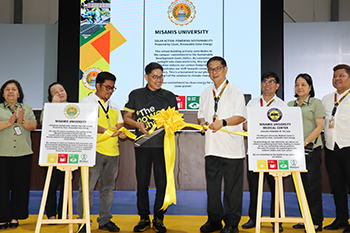 Turnover of solar energy management from WEGEN to MU |
Videos

|

|

|