Linkage & Networking
 November 12, 2026 9:10 A.M.
 28
Advancing Community Learning through Off-Campus Educational Outreach and Student-Led Initiatives
Misamis University brings learning beyond its campus through outreach programs that respond to local educational, health, environmental, and technological needs. Drawing on faculty expertise, student volunteers, and community partnerships, these initiatives support inclusive learning and contribute to community development.
The articles that follow showcase the breadth of this outreach. Community capacity- building programs such as TASK, BAGIDA, and BAGUIDA, alongside the ESTERO Project, promote local skills and environmental stewardship. School-based initiatives, including the Math TINIK Competency Enhancement Program, Reading Educational Advancement Program (REAP), and Adopt-a-School projects such as Pabasa and Project SHINE, help strengthen pupils’ numeracy and literacy. Health and technology efforts include nutrition and oral health education, an automated handwashing system for Montol National High School, a proposed solar-powered chlorine injection system, and the developing PK Sapad Serbisyo Connect healthcare information and referral portal.
Together, these efforts reflect the University’s commitment to sharing knowledge and practical solutions beyond campus, while supporting healthier, more informed, and more resilient communities.
Educational Outreach and Lifelong Learning Frameworks for Community Development
Misamis University actively fulfils its tripartite mandate of instruction, research, and community extension by delivering sustained educational outreach directly to local communities and partner institutions in alignment with policy directives from the Commission on Higher Education (CHED). Guided by the principle that higher education institutions must share institutional resources and expertise to uplift surrounding populations, the university provides specialized capacity-building workshops and non-formal educational initiatives outside traditional campus settings.
Expanding its educational reach beyond traditional academic settings, the College of Arts and Sciences at Misamis University advances lifelong learning and civic empowerment through the Training Assistance for Sangguniang Kabataan (TASK) program. University faculty conduct targeted off-campus governance and leadership workshops for local youth leaders and community members in the Municipality of Clarin. This educational outreach equips local officials with critical competencies in legislative resolution writing, statutory compliance under RA 7160, public ethics, democratic participation, and mental health management.
Complemented by this governance initiative, Misamis University's College of Arts and Sciences executes off-campus community extension through two structured, non- formal educational frameworks: the Barangay Generativity Integrated Development Approach (BAGIDA) and the Barangay Guimad Integrated Development Approach (BAGUIDA). These community-based platforms remove learning barriers and deliver targeted academic interventions to build long-term local capacity. Furthermore, the MU Biological Society (MUBS) leads the off-campus ESTERO (Ecological Strengthening Through Environmental Rehabilitation and Orientation) project, conducting tailored community lectures and hands-on workshops on creek preservation, waste segregation, and ecological stewardship in Barangay Guimad. Formally sustained through Memoranda of Understanding (MOUs) with school principals and local government units (LGUs), these initiatives deliver accessible, high-impact lifelong learning and educational outreach beyond the campus.
To address critical numeracy and literacy deficits among primary students, Misamis University executes targeted academic remediation programs in off-campus basic education settings. Through the Math TINIK Competency Enhancement Program, faculty and student volunteers from the Department of Mathematics conduct off-campus remedial tutoring, interactive problem-solving drills, and structured diagnostic assessments at Baybay Central School in Barangay San Roque, Ozamiz City, achieving a verified 80% improvement in pupils' core numeracy competencies and academic confidence. Concurrently, the Department of English and the student organization MUSTYLE (Misamis University Society of Talented and Young Language Enthusiasts) lead the Reading Educational Advancement Program (REAP) at Baybay Elementary School, delivering tailored literacy workshops, diagnostic assessments, custom learning kits, and guided storytelling sessions to strengthen word recognition, vocabulary, and reading comprehension for Grade 1 to 6 pupils.
PK Sapad Serbisyo Connect: Development of a Data-Secure Portal for Healthcare Dissemination, Referral, and Monitoring
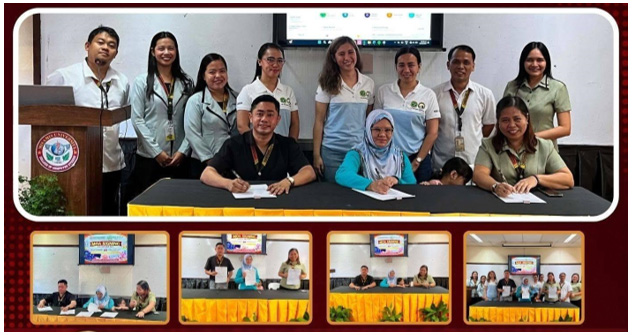
Misamis University’s College of Computer Studies integrates community- engaged experiential learning into its BSIT program through faculty-supervised capstone projects. One ongoing project, “PK Sapad Serbisyo Connect: Development of a Data-Secure Portal for Healthcare Dissemination, Referral, and Monitoring,” is being developed by BSIT students Shanyl Shane Bantilan and Mariel Manabay, under the supervision of Engr. Jerry M. Lumasag, in partnership with the Sapad Rural Health Unit (RHU), Lanao del Norte, during School Year 2026–2027.
The project responds to the RHU’s need for improved dissemination of healthcare information, patient referral, and monitoring of residents participating in healthcare activities. Formalized through a Memorandum of Agreement signed on August 25, 2026, the partnership provides students with an authentic learning environment where they work directly with the RHU’s PuroKalusugan focal person through regular consultations. Students apply competencies in software development, data and web security, cybersecurity, system design, and algorithm development while addressing an actual community need.
The proposed web-based portal will support batch SMS dissemination of healthcare information, recording and processing of health activity participants, patient referrals to neighboring healthcare facilities, and management of SMS templates. The intended beneficiaries are Sapad RHU personnel and residents of the municipality, including children and adults. As the project is still under development, system testing, user training, deployment, and user acceptance testing are yet to be completed; therefore, no completed community-impact outcomes are being claimed at this stage.
The project demonstrates Misamis University’s integration of experiential learning, community engagement, and technology development by allowing BSIT students to translate the needs of a public rural health facility into a technology-based solution. Student learning and participation are documented through consultation records, communication logs, project workbooks, faculty supervision records, and the signed partnership agreement, with further documentation expected upon completion and deployment of the system.
Adopt-a-School Project
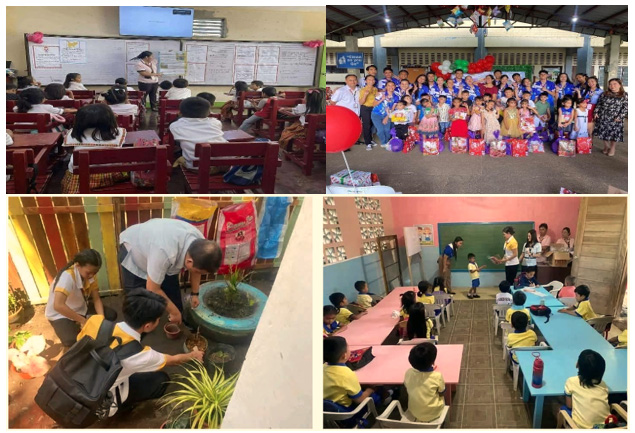
The Adopt-a-School Project of the Misamis University College of Education is a community-based engagement initiative that connects the University with local schools through sustained educational support, learner engagement, and participation of preservice teachers in authentic school and community settings. The project provides opportunities for Education students to apply their professional knowledge and skills while contributing to the learning needs and educational environment of partner schools.
As documented during 2025–2026, the College of Education implemented and participated in a continuing series of educational outreach activities involving young learners in local schools. These included storytelling and classroom engagement, foundational reading instruction, individualized reading assistance, learner encouragement, provision of learning materials and school supplies, classroom support, and participation in school-community activities. At Bangkal Kinder School, the documented September 30, 2025 outreach specifically included direct interaction with kindergarten learners and parents, provision of school supplies, classroom beautification, and the display of educational materials covering the alphabet, colors, shapes, and numbers.
The succeeding Pabasa and Project SHINE activities at Ozamiz City Central School extended this educational outreach through sustained reading support for beginning readers. Field Study students worked directly with Grade 1 and Grade 2 pupils, providing guided reading, phonics and word-recognition practice, repetition, storytelling, flashcards, questioning, positive reinforcement, and individualized assistance based on learners' needs.
The documentation further shows that the outreach continued across successive weeks, allowing preservice teachers to respond to learners' differing reading abilities and observe gradual improvements in participation, confidence, word recognition, pronunciation, syllable blending, and reading performance. The most recent report, dated 21–24 September 2026, documents continued Pabasa engagement at OCCS, including individualized guidance in letter recognition, word reading, and repeated practice according to learners' pace and needs.
The documented activities demonstrate educational outreach beyond the university campus through direct engagement with learners in local schools and through voluntary participation of Education students. The evidence includes school-based instructional activities, storytelling, reading support, learner engagement, educational-resource provision, and sustained community-school interaction. The following chronological record presents the documented educational outreach and related school-community engagement activities undertaken by the Misamis University College of Education from September 2025 to September 2026, with each activity identified according to its date, educational contribution, site, and role within the evidence.
Misamis University College of Dentistry Promotes Nutrition and Oral Health among Preschool Children of Bangkal, Ozamiz City
As part of this year’s Nutrition Month celebration, the College of Dentistry, in collaboration with the College of Education, once again visited Bangkal Daycare Center to bring an engaging “Nutrition and Oral Health Education Awareness Campaign” to its young learners. The activity highlighted the important connection between nutritious food choices, proper nutrition, and good oral health, emphasizing that healthy smiles begin with healthy habits established early in life.
Conducted on July 31, 2026, the activity brought together 10 students volunteers from Society of Misamis University Dental Clinicians (SMUDEC) under the guidance of their Clinical Instructor, Dr. Candy Marie Bolaybolay, in collaboration with Mrs. Beverly Dionio, a faculty member from the College of Education. The partnership provided an opportunity to integrate dental health education with age-appropriate teaching strategies, making the learning experience engaging and meaningful for young learners.
Through interactive discussions and engaging learning activities, the children were introduced to the relationship between the food they eat and the health of their teeth. They were encouraged to recognize nutritious food choices and understand why frequent consumption of sugary foods and drinks should be limited. Proper oral hygiene practices, particularly regular toothbrushing, were likewise reinforced. The children were encouraged to develop simple, healthy habits that they can practice at home and in school.
For the dental students, the activity provided an opportunity to apply their knowledge and develop their skills in communicating oral health messages to young children. The collaboration with the College of Education further strengthened the delivery of the activity by incorporating educational approaches appropriate for preschool learners.
The campaign forms part of the College of Dentistry's continuing commitment to community extension and preventive oral health promotion. By reaching children at an early stage of development, the College seeks to support the formation of healthy habits that can contribute to better oral and general health throughout Life.

Donation of Automated Handwashing System in Montol National High School, Ozamis City
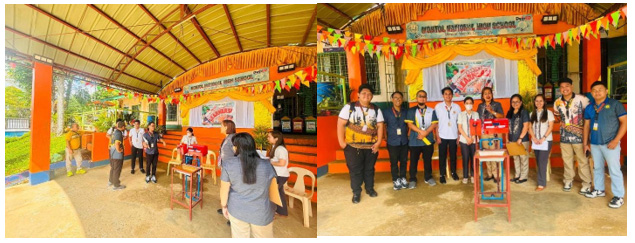
Misamis University conducted an educational outreach activity through the donation and demonstration of an Automated Handwashing System at Montol National High School, Ozamiz City, on June 15, 2026. The initiative involved BSEE students, their adviser, and the Extension Coordinator and was designed to extend university resources and technical knowledge beyond the campus while supporting the needs of the local public school.
The activity provided the school with an automated handwashing system, together with demonstration, instructional guides, and after-sales support to assist the students and teaching staff in its proper use and maintenance. Through the activity, university students were also given an opportunity to apply their technical knowledge in an actual community setting.
The initiative strengthened the university’s partnership with the local community and provided Montol National High School with access to supplementary educational and technology-based resources. Overall, the activity demonstrates Misamis University’s commitment to community engagement, educational outreach, and the extension of specialized learning and technical resources to public schools beyond the university campus.
Engineering a Sustainable Future: Solar-Powered Water Disinfection for Barangay Stimson Abordo
Misamis University developed the Design and Simulation of an Automatic Solar- Powered Chlorine Injection System for Barangay Stimson Abordo (Montol), Ozamiz City, Misamis Occidental in December 2025. The project addressed the need for safe drinking water in an off-grid rural community where water contamination and inconsistent manual chlorine dosing may pose public health risks. The study was conducted by BSEE students Oliver Jen N. Mata and Keith James G. Ragodos and focused on developing an automated, solar-powered solution for reliable water disinfection.
Using MATLAB/Simulink, the researchers designed and simulated a system integrating hydraulic modeling, flow-based chlorine dosing, PID control, and solar power. The design included a 555 W monocrystalline solar panel and a 24 V, 120 Ah lithium iron phosphate battery to support 24-hour autonomous operation. The researchers also determined appropriate chlorine feed rates, mixing and contact-time requirements, system dimensions, and estimated implementation costs.
Simulation results showed that the proposed system maintained stable chlorine concentrations ranging from 0.93 to 1.07 mg/L under low, typical, and high water-flow conditions. Cost estimates for the different contact-time configurations ranged from ?762,899.41 to ?5,590,581.98. Overall, the project provides a technically validated framework for an autonomous water-disinfection system that, if implemented, could improve access to safer drinking water and help reduce waterborne health risks among residents of the rural community.
Hybrid Seminar on Mass Blood Donation in the Philippine and Indonesian Contexts
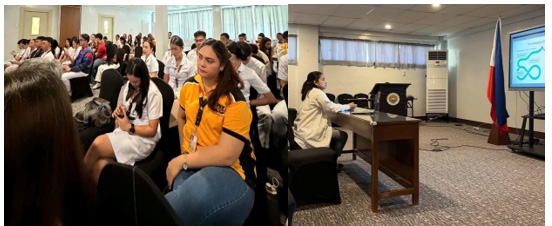
Misamis University College of Medical Technology, in collaboration with the Akademi Bakti Kemanusiaan Palang Merah Indonesia, conducted a Hybrid Seminar on Mass Blood Donation in the Philippine and Indonesian Contexts on September 25, 2026, from 10:00 a.m. to 12:00 p.m. Philippine Time. The activity was held at the Instructional Media Center, Misamis University, with select participants from both institutions joining through face-to-face and Microsoft Teams platforms.
The seminar was organized to promote awareness and understanding of mass blood donation practices, particularly the similarities, approaches, and experiences in the Philippines and Indonesia. It aimed to strengthen participants' knowledge of blood donation and its importance in supporting an adequate and safe blood supply, while also providing an avenue for academic and professional exchange between Misamis University and the Akademi Bakti Kemanusiaan Palang Merah Indonesia.
The main discussion featured Ruthie M. Balasabas, RMT, faculty member of the College of Medical Technology, Misamis University, who presented the Philippine perspective on mass blood donation. A corresponding presentation from a faculty member of the Akademi Bakti Kemanusiaan Palang Merah Indonesia provided an Indonesian perspective, allowing participants to gain comparative insights into blood donation practices in both countries. The presentations were followed by reactions from representatives of Misamis University and the Indonesian institution, providing opportunities for reflection and academic exchange.
Through the activity, participants gained additional knowledge and awareness regarding mass blood donation and its role in supporting community health services. The Philippine-Indonesian exchange also provided a broader perspective on blood donation initiatives and strengthened institutional linkages between Misamis University and the Akademi Bakti Kemanusiaan Palang Merah Indonesia.
Participants were given the opportunity to share their reactions and insights during the discussion and reaction sessions. Their participation and engagement reflected the relevance of the topic and the value of international knowledge exchange in strengthening awareness of blood donation and community health services. Overall, the seminar contributed to health education, professional development, and the promotion of community-oriented blood donation practices.

Announcement
|
|
|
Photo Gallery
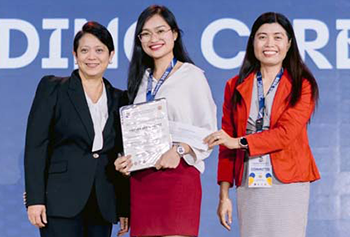 International Conference on Social Sciences 2026 |
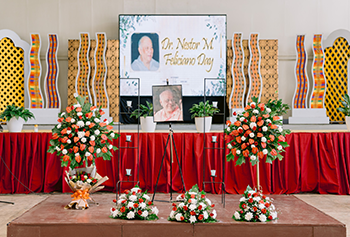 DR. NESTOR M. FELICIANO DAY |
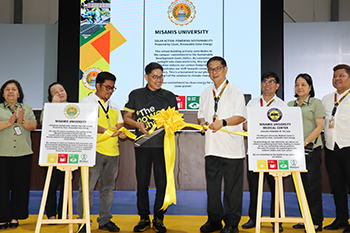 Turnover of solar energy management from WEGEN to MU |
Videos
|

|
|