



Improving Sanitation, Protecting the Marine Environment Through A Collaborative Effort: A Story of Barangay Barra’s Communal Toilet Project
Access to adequate sanitation remains one of the most urgent yet overlooked challenges in many coastal communities across the Philippines. One of the coastal barangays in the Municipality of Tudela, Misamis Occidental, is Barangay Barra. A coastal community with an estimated 36% of households lacking individual toilet facilities. With no other option, many residents resort to open defecation along the shoreline and within nearby mangrove areas, a practice that endangers public health, contaminates marine ecosystems, and degrades the coastal environment.
Health agencies consistently highlight the dangers posed by inadequate sanitation. UNICEF (2023) reports that poor sanitation directly contributes to the spread of waterborne diseases such as diarrhea, cholera, and parasitic infections. The World Health Organization (2022) warns that open defecation leads to persistent environmental contamination and undermines efforts toward achieving Sustainable Development Goal 6: ensuring clean water and sanitation for all. In the Philippine context, studies have shown that untreated human waste in coastal barangays directly pollutes nearshore waters, affecting not only the well-being of residents but also the sustainability of fisheries and the local tourism economy (SuSanA, 2012).
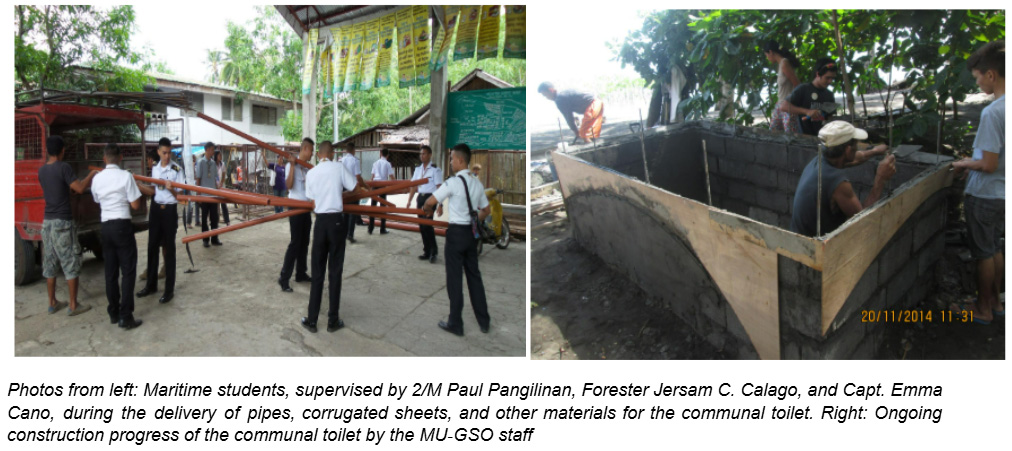
In response to these pressing concerns, Misamis University, through the College of Maritime Education’s Coastal Resources Regeneration and Alternative Livelihood (CORRAL) Program, launched the Communal Toilet Project in Barangay Barra. The initiative aimed to improve sanitation conditions, protect environmental health, and uplift community well-being by establishing a shared toilet facility accessible to at least 50 households.
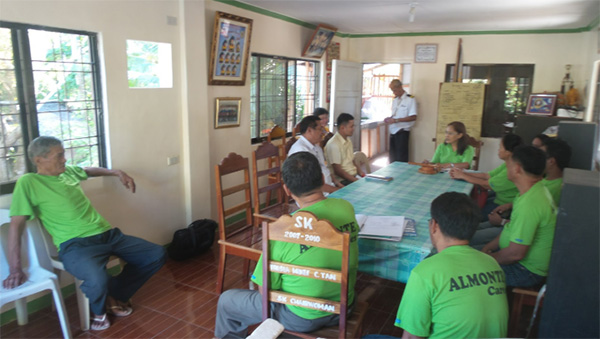
The communal toilet was constructed in November 2014 after residents and the Barangay Council of Barra, led by Barangay Captain Hon. Emma Cano, requested assistance from Misamis University. Some households, particularly those in Purok 2 and 3, could not afford to build individual toilets due to meager incomes and the high cost of materials. For these households, the communal toilet served as an essential and life-improving service
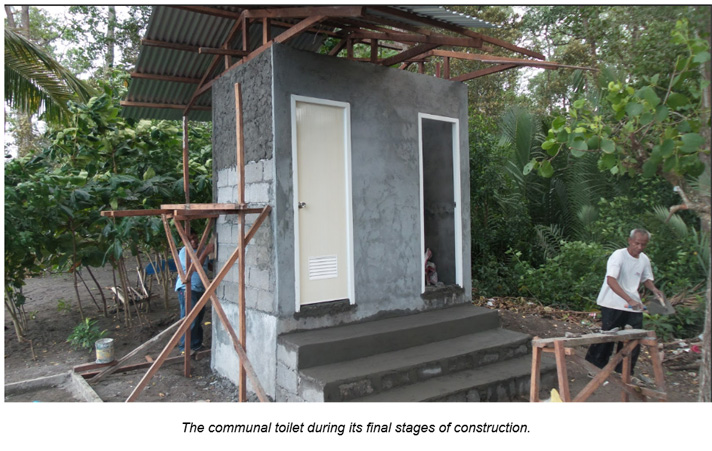
In 2024, after 11 years of continuous use, the facility had significantly deteriorated. The roofing was worn out, doors were damaged, and the toilet bowls frequently clogged. Recognizing the structure’s need and importance, the newly elected barangay officials under the new Barangay Captain Hon. Jimson Faunillan, together with his council, formally requested support from Misamis University’s Community Extension Program (MUCEP) for repair and rehabilitation.
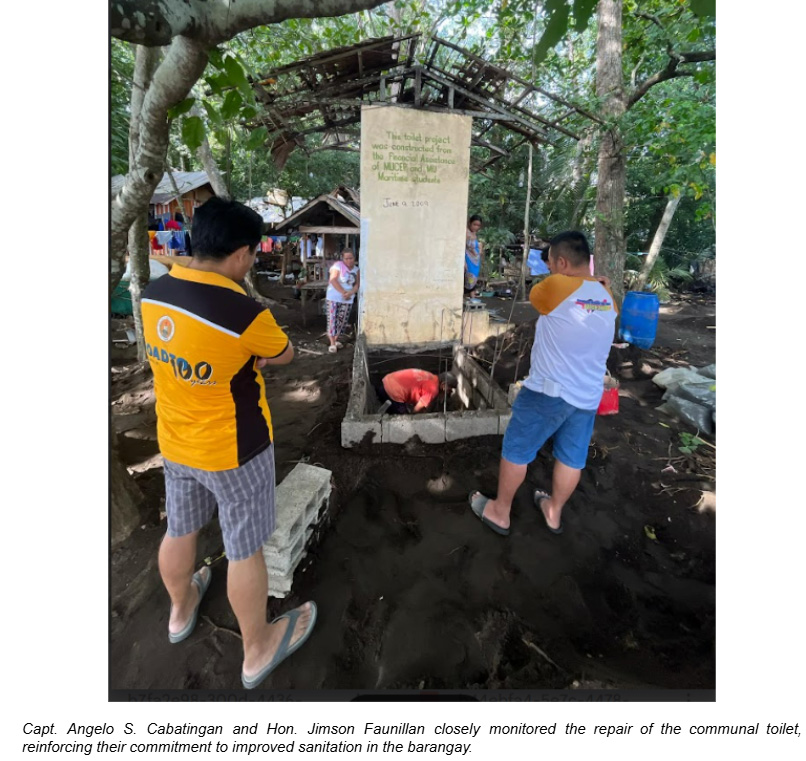
The restoration was made possible through collaborative efforts and shared commitment of different stakeholders. The Central Bank of the Philippines - Employees Welfare Committee, Misamis Bank in Tudela, the Local Student Council of the College of Maritime Education, and the Misamis University Administration provided cash support and in-kind donations. The College of Engineering and Technology contributed by designing an additional septic tank to enhance the facility’s capacity and sustainability, and by assisting with repainting the refurbished structure. The repair project was successfully completed in January 2025. In addition to the Communal Toilet, the Mediatrix Homes in Ozamiz City has donated five (5) toilet bowls, while the Tudela Golden Club Lions International has contributed two (2) toilet bowls. These were distributed to those households in need.

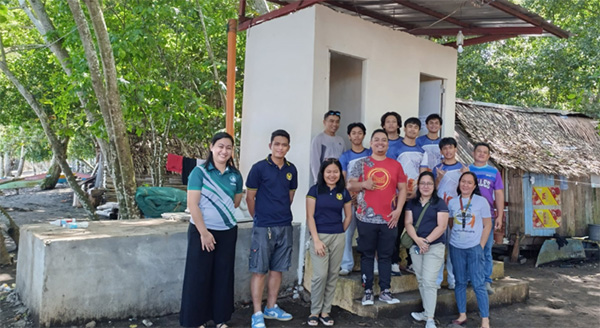
Representatives from MUCEP, the Central Bank of the Philippines-Employees Welfare Committee, faculty and students from the College of Engineering and Technology, and the MU driver pose for a group photo after completing the painting of the newly repaired communal toilet.
Today, the rehabilitated communal toilet is fully functional and continues to serve residents of Purok 2 and 3. It has also become a valuable amenity for visitors and tourists who frequent Barra for swimming and recreation, helping ensure a cleaner, healthier coastal environment for locals and guests alike.
Interviews with community beneficiaries revealed the project has profound impact. According to them, before the intervention, some residents secretly defecated along the shoreline or within the mangrove forest. Now, with access to a clean, safe, and dignified sanitation facility, community members express deep gratitude and relief. Beyond improving public health, the project promotes environmental protection, social equity, and the empowerment of marginalized coastal families.
The Communal Toilet Project in Barangay Barra stands as a strong example of how universities, local governments, and community members can work together to address long-standing sanitation challenges, restoring dignity, protecting coastal ecosystems, and creating healthier, more resilient communities.

Announcement

|
|
|
Photo Gallery
 DR. NESTOR M. FELICIANO DAY
|
 Turnover of solar energy management from WEGEN to MU
|
 MU Sinulog Celebration 2026
|
Videos

|

|

|