

 32
Progress Report on SDG 16: Peace, Justice and Strong Institutions for Academic Year 2025-2026
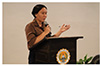
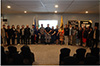
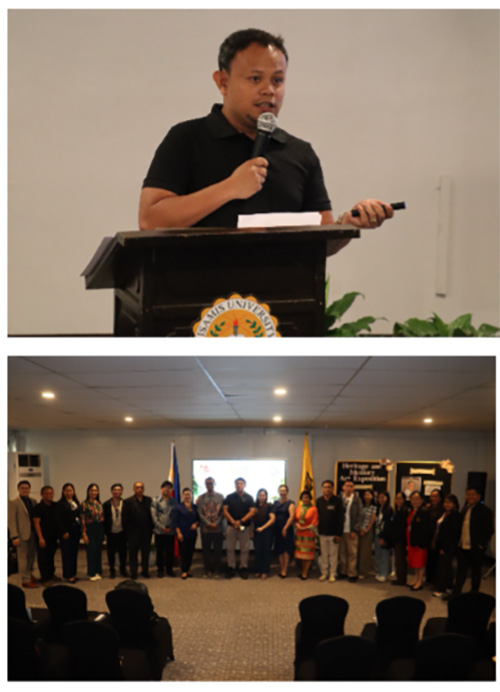
The report on SDG 16: Peace, Justice and Strong Institutions was presented by Dr. Jose Cuevas, Jr, Dean of the College of Criminology at Misamis University, on October 30, 2026, during the 17 UN Sustainable Development Goals (SDG) Validation. Participants included deans, administrators, faculty members, students, stakeholders, alumni, and guests from the Department of Environment and Natural Resources Provincial Office, the Department of Agriculture-Ozamiz City, the Disaster Risk Reduction and Management Office (DRRMO)- Ozamiz City, the Economic Enterprise Development Office (CEEDO)-City Government of Ozamiz, the Tourism Office-Ozamiz City, and provincial and city libraries. The event was held at the Function Hall on the Misamis University campus in Ozamiz City.
The overall report is as follows:
Participatory University Governance
Misamis University promotes stakeholder participation through its Academic and Administrative
Councils, which meet monthly to discuss academic, operational, and institutional matters. Joint
council meetings and annual strategic planning provide additional opportunities to deliberate on
University priorities. Elected student representation, parent conferences, and alumni
consultations also contribute to decision-making and institutional responsiveness.
Student Representation and Organizational Autonomy
The University recognizes the Misamis University Recognized Students Organization (MURSO),
an umbrella body for student-led organizations representing a range of academic, cultural,
social, environmental, and religious interests. Organizations elect their own officers, maintain
their bylaws and structures, and undergo annual recognition. MURSO’s annual festival provides
a longstanding platform for student expression, collaboration, and cultural activities.
External Stakeholder Engagement
The University’s Quality Management System and Vice President for Academic Affairs Policies
and Procedures Manual provide formal frameworks for consulting external stakeholders.
Colleges engage stakeholders in curriculum evaluation, development, improvement, and
implementation. Parents, alumni, and community representatives also provide feedback through
conferences, gatherings, and consultations, supporting relevant programs and continuous
improvement.
Community Participation in Decision-Making
Through the Misamis University Community Extension Program (MUCEP), the University
consults local communities to identify needs and priorities for extension initiatives. Local
government officials and community stakeholders contribute to planning and implementation.
MUCEP’s accreditation as a Civil Society Organization by the Province of Misamis Occidental,
under Sangguniang Panlalawigan Resolution No. 532-25, valid until June 30, 2028, also
provides a formal avenue for participation in local governance and community development.
Integrity, Transparency, and Accountability
Misamis University publishes its principles against organized crime, corruption, and bribery,
emphasizing integrity, transparency, accountability, ethical conduct, and the rule of law. The
“SPEAK UP!” reporting mechanism provides cellphone/Viber and email contacts for inquiries,
feedback, suggestions, and concerns, with messages treated confidentially.
The University also makes financial information available in public areas near the Accounting
Office and on designated bulletin boards. Before proposed tuition fee adjustments are
implemented, student leaders and representatives of recognized student organizations are
consulted, allowing them to ask questions and provide feedback.
Academic Freedom and Research
The University supports academic freedom in research through the policies and procedures of
the Misamis University Research Center (MURC), including its Research Procedures Manual
and researcher guidelines. The MU Research Agenda 2024–2026 spans fields such as
education, healthcare, environmental sustainability, biodiversity, gender equality, peace and
security, and innovation. Research is disseminated through publications, conferences,
collaborative projects, consortia, and externally funded initiatives.
Government Engagement and Policy Knowledge
The College of Law connects students with legislative institutions through field observations and public-policy discussions. From September 7–15, 2026, law students observed Sanggunian sessions in several cities and municipalities, including Ozamiz, Oroquieta, Tangub, and Lanao. These activities offer firsthand exposure to legislative processes and public decision-making. The University also supports research collaboration with government institutions through Office of Linkages and International Affairs (OLIA), academic colleges, and research units. Its policies provide a framework for partnerships involving research, consultations, dialogues, and publications that can contribute to evidence-informed public-sector decision-making.
Outreach and Capacity-Building
MUCEP coordinates college-led outreach and skills-development initiatives with government and community partners. Examples include digital-skills initiatives by the College of Computer Studies in partnership with the Municipality of Sapad, Lanao del Norte, and community safety and preparedness support by the College of Criminology for the Barangay Peacekeeping Action Team of Barangay Aguada, Ozamiz City.
Non-Partisan Civic Learning
Misamis University provides a non-partisan academic setting for examining governance and public policy. Educational engagements with elected officials and legislative bodies, including visits to the House of Representatives and Senate, help students observe government processes and encounter diverse perspectives. These activities encourage respectful discussion, critical inquiry, and informed civic participation without endorsing a political party or position.
Law and Civil Enforcement Graduates
The University reported 1,422 total graduates, including 120 graduates from law- and enforcement-related courses.
Overall Assessment
Misamis University demonstrates progress on SDG 16 through participatory governance, student representation, stakeholder consultation, community engagement, academic freedom, financial transparency, and connections with government institutions. Its formal policies and practical programs provide multiple channels for accountability, civic learning, and collaboration.

Announcement

|
|
|
Photo Gallery
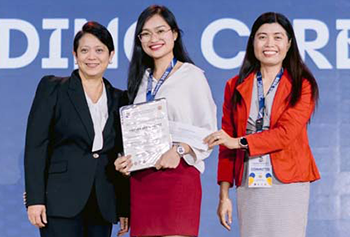 International Conference on Social Sciences 2026 |
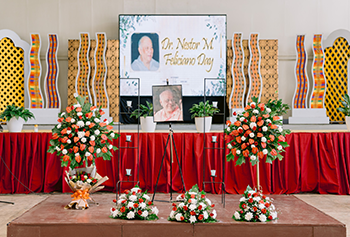 DR. NESTOR M. FELICIANO DAY |
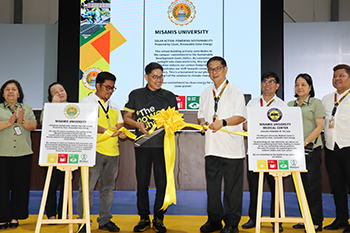 Turnover of solar energy management from WEGEN to MU |
Videos

|

|

|