

 27
Misamis University's Employee Rights, Inclusion, Participation, and Grievance Resolution
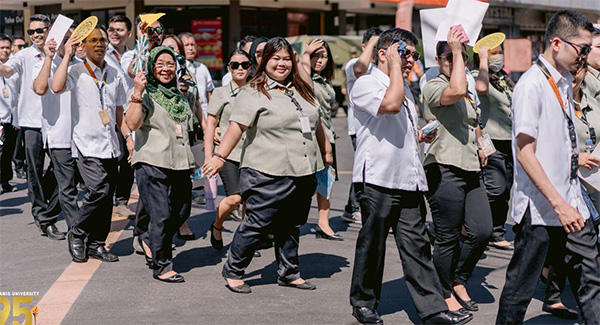
Misamis University recognizes the right of all eligible employees, including women, men, international personnel, faculty members, non-teaching staff, regular, probationary, part-time, and contractual employees. The university employees are treated without discrimination regardless of sex, gender, gender identity or expression, sexual orientation, age, civil status, religion, disability, nationality, employment category, or other status protected by law. All employees have the same rights to hold leadership positions, and engage in lawful discussion. These protections are consistent with Republic Act No. 6725, which prohibits discrimination against women concerning the terms and conditions of employment. No employee shall be disadvantaged in appointment, workload, compensation, promotion, training, performance evaluation, benefits, discipline, contract renewal, or termination because of union membership, lawful union activity, or participation in an employee association.
International employees are likewise treated with dignity, fairness, and inclusion. International staff members with valid Philippine work permits may exercise the right to self-organization and may join or assist a labor organization for collective-bargaining purposes when the reciprocity conditions provided under Philippine law are satisfied. Regardless of whether a particular international employee qualifies for union membership under these statutory conditions, the employee retains access to the University’s consultation, representation, grievance, due-process, nondiscrimination, and workplace-protection mechanisms.
The university empowers its employees through faculty and staff meetings, institutional committees, consultations, assemblies, surveys, suggestion mechanisms, direct communication with supervisors and administrators, and participation in policy and decision-making processes. Employees may raise matters concerning salary, benefits, workload, working conditions, occupational safety, professional development, discrimination, harassment, discipline, and other employment concerns. These participatory mechanisms provide employees with a meaningful voice but do not replace, prevent, or limit their legal right to organize or bargain collectively.
The University maintains a strong and accessible grievance and appeal process through which employees may seek the prompt and impartial resolution of workplace concerns. A grievance may be brought to the immediate supervisor, unit head, Human Resource Management Office, designated grievance committee, senior administration, or other competent University office, depending on the nature and sensitivity of the concern. Employees may submit complaints verbally or in writing and may request confidentiality, representation, reconsideration, or escalation when dissatisfied with an initial decision. Complaints involving a supervisor may be reported directly to a higher authority to avoid conflicts of interest. Good-faith complainants, witnesses, employee representatives, and persons assisting in a grievance are protected from retaliation, intimidation, harassment, loss of benefits, unfavorable assignments, or unjust disciplinary action.
Grievances are acknowledged, documented, assessed, investigated by impartial persons, and resolved through dialogue, mediation, corrective action, or a reasoned written decision, as appropriate. Employees are informed of relevant findings and available appeal channels, subject to privacy and due-process requirements. When internal remedies do not resolve a matter, employees remain free to seek assistance from the Department of Labor and Employment, the National Conciliation and Mediation Board, the National Labor Relations Commission, or another competent authority. Access to the University grievance system does not waive or restrict any legal remedy or labor right.
Implementation is supported by employee orientation, publication of the policy, leadership communication, grievance records, consultation minutes, committee representation, employee surveys, corrective-action reports, internal audits, and Management Review under the University’s ISO 21001:2018 Educational Organizations Management System. Human Resource Management monitors complaints, participation opportunities, allegations of interference or retaliation, case-resolution time, and employee feedback to determine the policy’s effectiveness and identify opportunities for improvement.

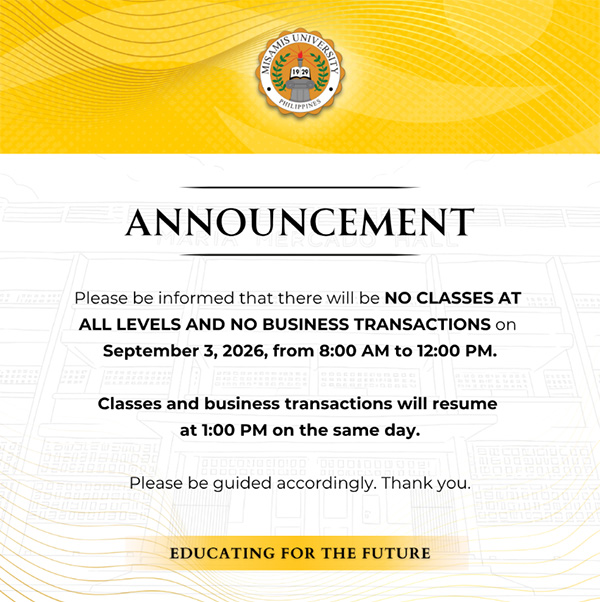
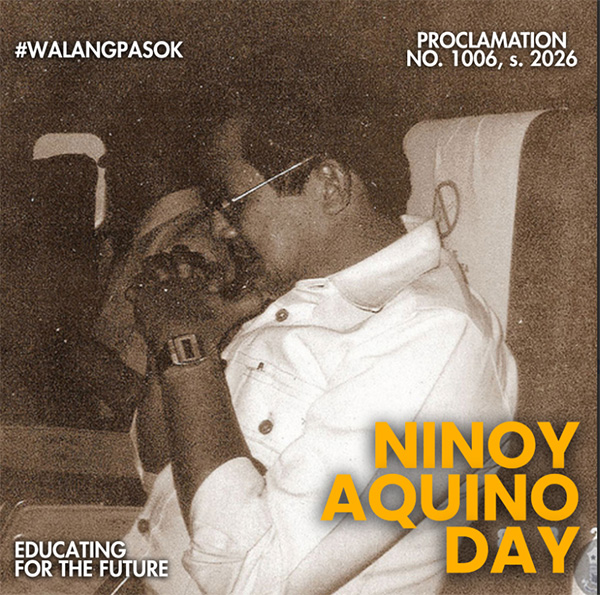
Announcement
|
|
|
Photo Gallery
 International Conference on Social Sciences 2026 |
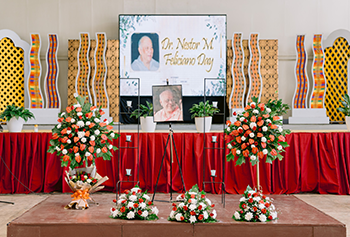 DR. NESTOR M. FELICIANO DAY |
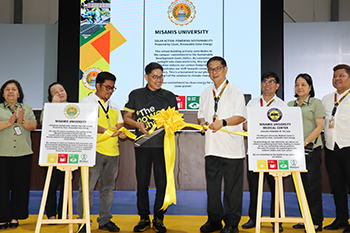 Turnover of solar energy management from WEGEN to MU |
Videos

|

|
|