

 28
Misamis University Reduces Its Carbon Footprint Through Campus Vehicle Regulations
Misamis University promotes sustainable commuting by limiting the number of vehicles allowed to park on campus. Each day, up to 40 cars and 60 motorcycles may park on campus. Parking is available only to personnel with an official parking pass and is allocated on a first-come, first-served basis.
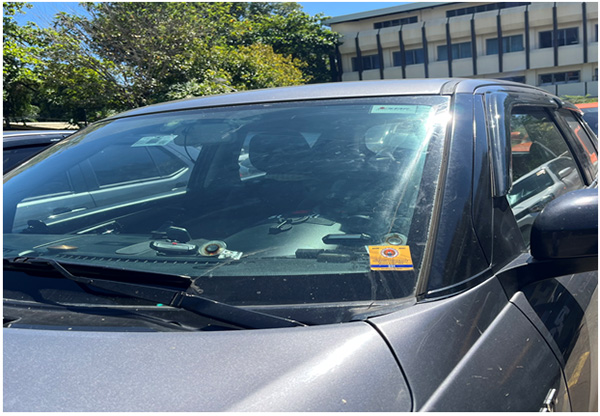
Personnel may apply for a vehicle-pass sticker at the Office of the Vice President for Administration. Passes are issued on a first-come, first-served basis and must be renewed annually. Approved applicants must display the sticker on their vehicle’s windshield. The University enforces a “No pass, no entry” policy at the campus gates. Personnel without a vehicle-pass sticker are expected to commute or use another mode of transportation approved by the University.
To qualify for a university vehicle-pass sticker, applicants must provide proof that their vehicle has passed the required emissions test. The Land Transportation Office (LTO), the government agency responsible for land transportation in the Philippines, requires this test as part of the vehicle-registration process.
When applying for a university vehicle-pass sticker, the vehicle owner must present the vehicle’s current LTO registration. Because passing the emissions test is required to obtain or renew the registration, applicants must complete the test before applying for the sticker.
Once the owner presents valid registration, the vehicle may be considered for a university pass for the academic year. The University records issued passes in a logbook, including the pass number, vehicle owner’s name, driver’s license number, and vehicle registration number. At the gate, the guard on duty checks that each vehicle entering campus displays a valid pass sticker on its windshield.
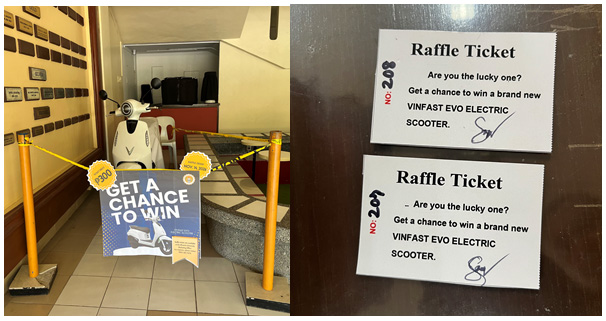
In addition to limiting the number of cars allowed to park on campus, the University is promoting the use of electric scooters through a new program. The Office of the Vice President for Administration is leading the initiative. As an initial activity, the University is holding a raffle for one electric scooter, with the drawing scheduled for October 30, 2026. The raffle aims to raise awareness of the initiative and encourage the university community to consider electric vehicles as an alternative for commuting to campus.
The University also offers personnel the option of applying for a loan through Misamis Bank, which is owned by the University, to purchase an electric scooter. Loan repayments are made through payroll deductions in installments. Several personnel have already applied for loans and purchased scooters. The University may continue promoting the initiative next semester.to get the unit for their own. This may continue the encouragement in the next semester. Moreover, Misamis University encourages the use of bicycles by providing bicycle parking areas. Bicycle users do not need a vehicle pass to enter the campus. They can park and lock their bicycles in the designated areas. This facility is open to all students, including high school and college students, as well as faculty and staff.
This initiative by Misamis University aims to reduce the carbon footprint on campus and in the surrounding community. It helps limit the number of vehicles used and provides alternative ways to commute between home and campus. By encouraging the use of bicycles and electric scooters powered by solar energy, the university supports more sustainable transportation and reduces reliance on diesel and other nonrenewable energy sources. These efforts contribute to a healthier environment. The initiative also demonstrates to the people of Ozamiz City Misamis University’s commitment to sustainable energy use and reducing carbon emissions. It helps protect the community from pollution and preserve the environment for future generations.

Announcement

|

|

|
Photo Gallery
 International Conference on Social Sciences 2026 |
 DR. NESTOR M. FELICIANO DAY |
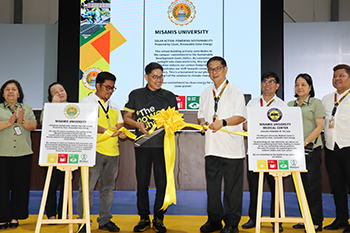 Turnover of solar energy management from WEGEN to MU |
Videos

|

|

|