

 29
Labor Rights and Workplace Protections for Outsourced Workers at Misamis University
Misamis University has an institutional policy requiring workers engaged through legitimate contractors, subcontractors, agencies, concessionaires, and other third parties to receive the fundamental labor rights and workplace protections applicable to the services they perform. In a university setting, outsourced activities may include campus security, janitorial services, building maintenance, construction and renovation, landscaping, transportation, food services, bookstore and retail concessions, waste management, information technology support, equipment servicing, and assistance during institutional events, except where student work is governed by separate University rules.
Outsourcing may not be used to avoid labor standards, engage in labor-only contracting, conceal an employer-employee relationship, or expose third-party workers to inferior treatment. Before engaging a service provider, the University verifies legal registration, business permits, DOLE registration (when applicable), licenses, operational and financial capacity, labor-compliance history, occupational safety performance, and the ability to pay lawful wages and statutory benefits. The University also examines whether the arrangement is legitimate contracting and requires disclosure of any subcontracting.
Service agreements specify the scope and duration of work, assigned responsibilities, contract amount, work location, worker-protection requirements, monitoring arrangements, and consequences for violations. Contractors remain responsible for lawful recruitment, employment, supervision, compensation, benefits, social-security contributions, security of tenure, and due process for their workers. Misamis University, as principal and controller of the campus workplace, provides oversight and ensures that contracted activities comply with University policies and applicable laws.
Outsourced workers are entitled to applicable minimum wages and wage-related benefits, timely salary payment, lawful working hours, rest periods, and required social-security coverage. They must also receive safe and healthful working conditions, appropriate safety orientation, hazard information, personal protective equipment, access to emergency procedures, drinking water, sanitation facilities, and necessary medical or first-aid assistance. Outsourced personnel working alongside University employees are treated with equal dignity and respect and are protected against discrimination, harassment, forced labor, human trafficking, retaliation, and degrading treatment.
Before deployment, the University and contractor verify each worker’s identity, qualifications, training, licenses, clearances, and authorization to perform the assigned work. Security personnel must possess the required licenses and training; technical and maintenance workers must demonstrate competence; food-service personnel must comply with health and sanitation requirements; and construction workers must receive task-specific safety orientation and protective equipment. Students may only be assigned work consistent with applicable University rules and authorizations. Outsourced workers also receive orientation on campus rules, emergency procedures, restricted areas, student protection, data privacy, and appropriate conduct when interacting with students, employees, visitors, and other stakeholders.
Outsourced workers may report wage, benefit, safety, discrimination, harassment, or other employment concerns to their contractor or directly to designated University offices, including Human Resource Management, Purchasing, Safety and Health, Quality Assurance, Legal, or the concerned unit. The University handles reports confidentially and protects good-faith complainants against retaliation. The University may conduct document reviews, workplace inspections, confidential worker interviews, and risk-based verification of payroll, working time, statutory remittances, safety records, and corrective actions.
Confirmed violations require prompt remediation and may result in payment of unpaid wages or benefits, correction of records, provision of training or protective equipment, protection from retaliation, closer monitoring, suspension of deployment, contract termination, supplier disqualification, or referral to the proper authorities. Through these measures, Misamis University integrates decent-work principles into campus operations, procurement, supplier management, occupational safety, risk management, and continual improvement while protecting all workers who contribute to the University’s educational environment.

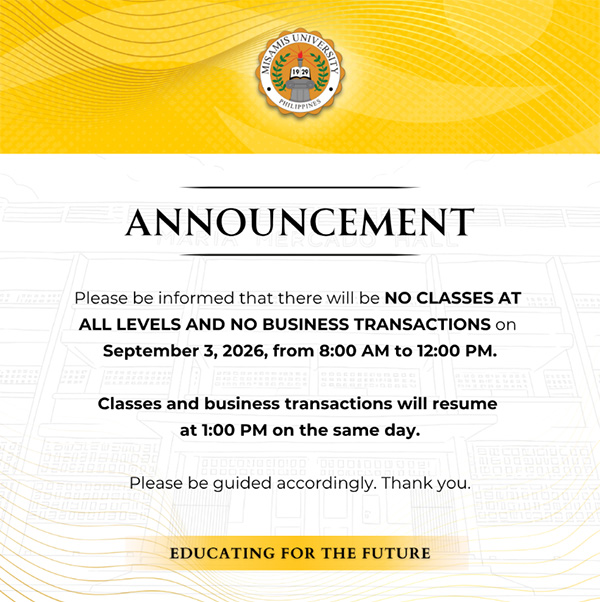
Announcement
|
|
|
Photo Gallery
 International Conference on Social Sciences 2026 |
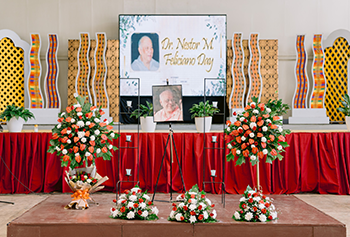 DR. NESTOR M. FELICIANO DAY |
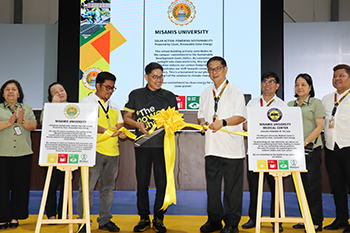 Turnover of solar energy management from WEGEN to MU |
Videos

|

|

|