

 30
Employee Grievance, Clarification, and Appeal Procedure at Misamis University
Misamis University has an established process for employees to seek clarification, raise a complaint, or appeal a decision affecting their employment rights, salary, benefits, pay-grade placement, faculty or staff ranking, workload compensation, promotion, leave, working conditions, disciplinary action, or other terms and conditions of employment. The University implements this process through its Grievance Procedure, available to teaching and non- teaching personnel, including regular, probationary, part-time, contractual, project-based, visiting, and international employees, where applicable.
An employee who believes that an employment right has been denied, a policy has been incorrectly applied, or compensation has been inaccurately determined may submit a signed clarificatory letter, complaint, or appeal to the Human Resource Management Office. The communication should identify the decision or concern being questioned, explain the grounds for the appeal, state the remedy or clarification requested, and include available supporting documents. These may include the employee’s appointment, contract, payslips, time records, workload assignment, faculty or staff ranking results, salary-adjustment notice, job description, performance evaluation, leave record, applicable policy, or previous correspondence.
Human Resources acknowledges and records the submission, maintains its confidentiality, and conducts an initial assessment to determine the nature of the concern and the appropriate reviewing authority. When the matter involves payroll computation, benefits, deductions, or salary implementation, Human Resources coordinates with Finance or Payroll. Concerns involving faculty ranking, teaching load, promotion, or academic assignments may be referred to the concerned dean, academic office, or ranking committee. Staff classification and administrative concerns may be referred to the appropriate unit head or reviewing committee. Refer legal, data-privacy, safety, or discrimination concerns to the competent office when necessary.
The employee is given a fair opportunity to explain the concern, submit additional evidence, and respond to information relevant to the review. The concerned supervisor or office must also provide the basis for the questioned decision and its supporting records. Decisions may not be based solely on unsupported statements. The review considers applicable University policies, the Administrative and Faculty Manuals, employment contracts, approved salary schedules, Faculty and Staff Ranking Systems, government wage requirements, previous decisions, and relevant laws.
Whenever practicable, the University first seeks an appropriate resolution through clarification, record correction, dialogue, or facilitated discussion. If the concern is not resolved at the initial level, it proceeds through the formal Grievance Procedure. Human Resources consolidates the findings and recommendations and forwards the case through the prescribed administrative channels. The University President reviews and approves the final institutional decision, subject to the authority reserved for the Board of Trustees or another governing body under University policies.
The employee receives a written response explaining the decision, its basis, and any corrective or remedial action. Appropriate remedies may include correcting payroll or personnel records, paying verified salary or benefits, adjusting pay-grade placement, reconsidering faculty or staff ranking, correcting workload compensation, restoring an employment benefit, modifying an administrative decision, clarifying policy, or referring the matter for further investigation.
Employees who file a clarification, complaint, or appeal in good faith are protected against retaliation, intimidation, discrimination, harassment, reduction of lawful benefits, or other adverse treatment. Employees may be accompanied or assisted by a representative where permitted by University procedure. Any person with an actual conflict of interest must disclose it and should not determine the appeal. Information is shared only with personnel who need it for proper review and resolution.
Human Resources maintains a controlled record of the clarification or complaint, supporting evidence, meetings, findings, recommendations, approvals, written decisions, corrective actions, and proof of communication to the employee. The University monitors grievances for recurring issues and trends. The University considers significant findings and systemic concerns during policy review, internal audit, risk assessment, and Management Review under the University’s management system.
Through this documented process, Misamis University ensures employees have an accessible, fair mechanism to question decisions, protect their employment rights, seek correction of pay- related concerns, and receive a reasoned decision approved by the University President.

Announcement

|
|
|
Photo Gallery
 International Conference on Social Sciences 2026 |
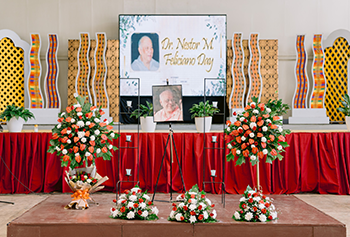 DR. NESTOR M. FELICIANO DAY |
 Turnover of solar energy management from WEGEN to MU |
Videos

|

|
|