

 38
BEYOND THE CAMPUS: MISAMIS UNIVERSITY'S COMMITMENT TO WATER STEWARDSHIP AND COMMUNITY PARTNERSHIPS
Water sustainability is not achieved through conservation efforts alone. It requires institutions to practice responsible water use, communities to understand and protect their resources, and stakeholders to work together toward long-term water security.
At Misamis University (MU), this responsibility extends beyond the management of water within its campus. Through institutional conservation initiatives, agricultural water-harvesting facilities, community extension activities, academic innovations, and research partnerships, the University brings water stewardship into its daily operations and extends its impact to communities and environmental stakeholders.
From encouraging every campus member to use water responsibly to helping communities strengthen their water systems and supporting collaborative efforts to protect watersheds, Misamis University demonstrates that meaningful water stewardship begins with institutional action and grows through shared responsibility.
PRACTICING WATER STEWARDSHIP WITHIN THE UNIVERSITY
Making Water Conservation Part of Everyday Campus Life
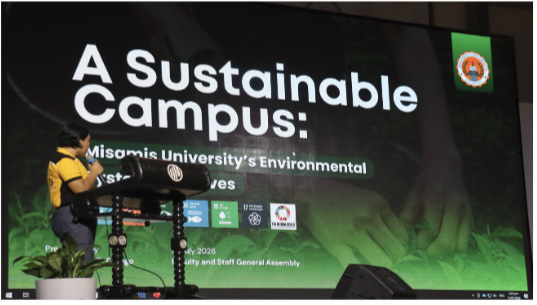
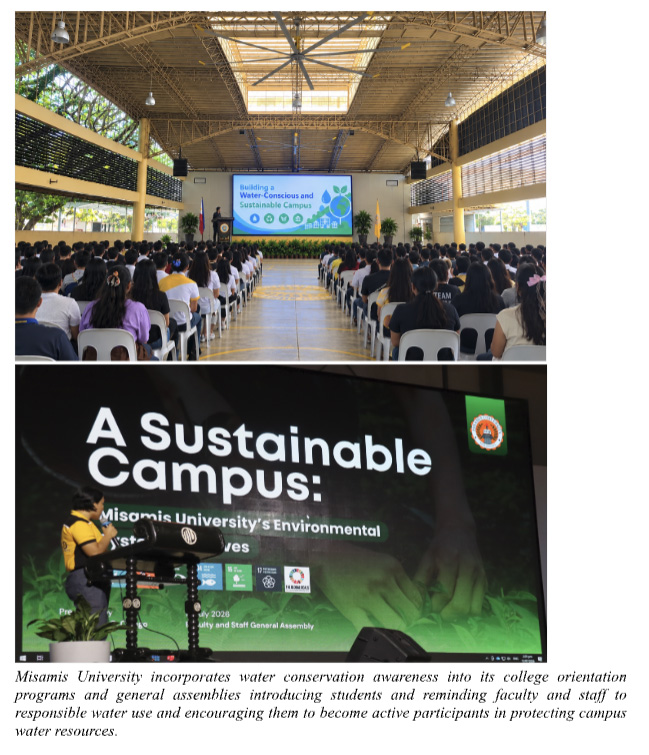
A culture of water conservation begins with everyday decisions. At Misamis University, conscious water use is promoted through an institution-wide approach that combines education, leadership engagement, and practical reminders. Water conservation is integrated into college orientation programs, introducing students to responsible water use as part of their transition into university life. Seminars on water consciousness and conservation further encourage student leaders to become advocates of water-saving practices among their peers. During general assemblies, faculty and staff are also engaged in promoting responsible water use and conservation.
These educational initiatives are reinforced by reminder signs posted near campus faucets, encouraging members of the University community to turn off taps when not in use and avoid unnecessary water consumption. Simple as they may appear, these reminders help translate environmental awareness into daily practice. By engaging students, faculty, staff, and campus leaders, Misamis University reinforces the understanding that conserving water is a shared responsibility. Rather than treating water conservation as an occasional campaign, the University works to make it a conscious and consistent part of campus life.
Harvesting Water for Sustainable Agriculture, Learning, and Research
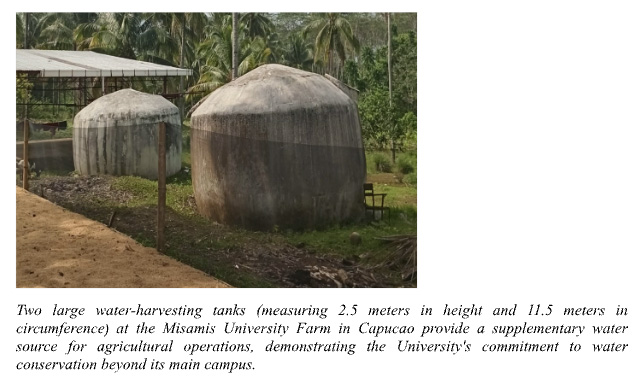
The University's commitment to responsible water management also extends to its agricultural facilities. At the Misamis University Farm in Capucao, two large water-harvesting tanks provide a supplementary source of water for crop production, plant watering, and other daily farm activities. These facilities serve both operational and academic purposes. The MU Farm functions as a field-based learning and research facility of the College of Agriculture and Forestry, where students and faculty members conduct research, undertake thesis projects, and gain practical experience in agricultural production.
By integrating harvested water into farm operations, Misamis University demonstrates how water conservation can support agricultural activities while providing a practical learning environment for students. The facilities also allow the University to connect sustainable resource management with agricultural education and research. Through this initiative, water harvesting becomes more than a farm utility. It forms part of the University's broader effort to promote resource efficiency and demonstrate responsible water management across its associated grounds.
EXTENDING WATER STEWARDSHIP BEYOND THE CAMPUS
Empowering Communities Through Water Management Education
For water resources to remain reliable and sustainable, communities must have the knowledge and capacity to manage and protect them. Recognizing the importance of local participation, Misamis University provides continuing water-management education and technical support to Barangay Stimson Abordo, Ozamiz City, its adopted community, through its Community Extension Program and partnership with the Linusas-Laburak Cooperative (LILAC).
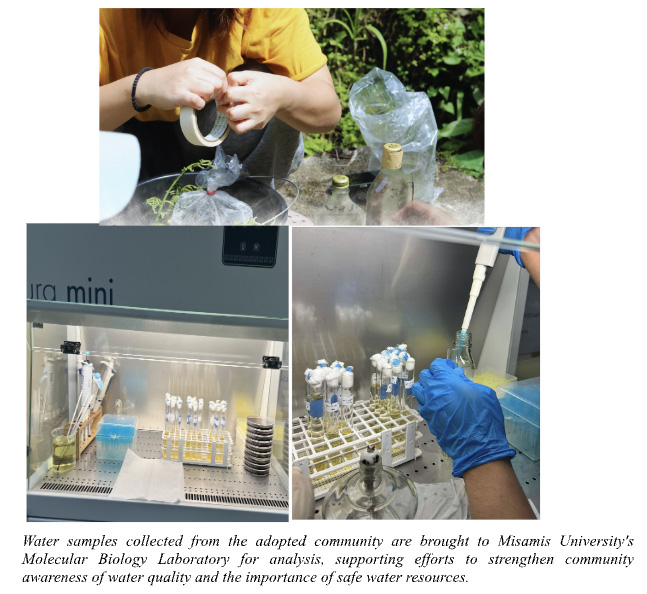
The University's engagement brings practical learning directly to the community. MU faculty members, staff, and students have worked with LILAC representatives to inspect the community water source, identify leaking pipes and necessary repairs, assess water-tank capacity, and collect water samples for laboratory analysis at the University's Molecular Biology Laboratory. These activities provide hands-on learning on water conservation, system maintenance, water safety, and resource protection. They also allow community representatives to participate in identifying concerns and understanding the condition of their water facilities.
As an adopted community, Barangay Stimson Abordo remains part of the University's continuing extension engagement. Through technical guidance, practical assessments, and community participation, Misamis University helps strengthen local capacity to manage, protect, and sustain available water resources.
Bringing Water-Saving Innovation to Schools
Misamis University also extends its technical knowledge and innovations to educational institutions beyond its campus, demonstrating how engineering solutions can address practical water conservation and sanitation needs.
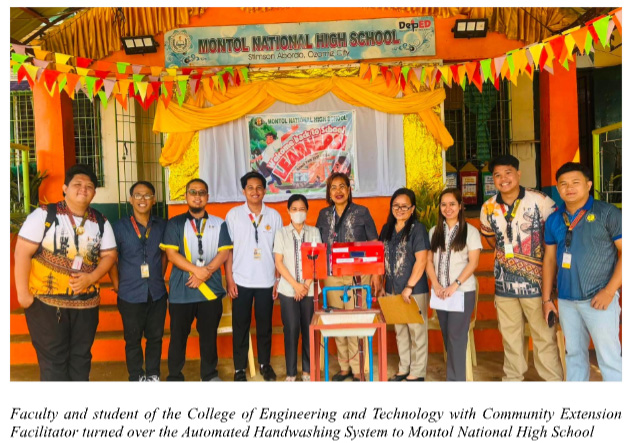
Through an outreach activity of its Electrical Engineering Department, the University introduced an Automated Handwashing System to the school community of Montol National High School. The technology demonstrates a practical approach to controlled water use while supporting proper handwashing and sanitation. Faculty members and students presented the system and demonstrated its application, providing school learners and personnel with an opportunity to understand how technology can contribute to more responsible water consumption. The activity also allowed the University's academic community to translate engineering knowledge into a practical solution that can be appreciated and understood in an everyday school setting.
By bringing this innovation to a local school, Misamis University reinforces the connection between technology, environmental responsibility, and public health. The initiative shows that water conservation can be supported not only through awareness but also through practical innovations that encourage more efficient use of resources.
Extending Water Consciousness Across Communities
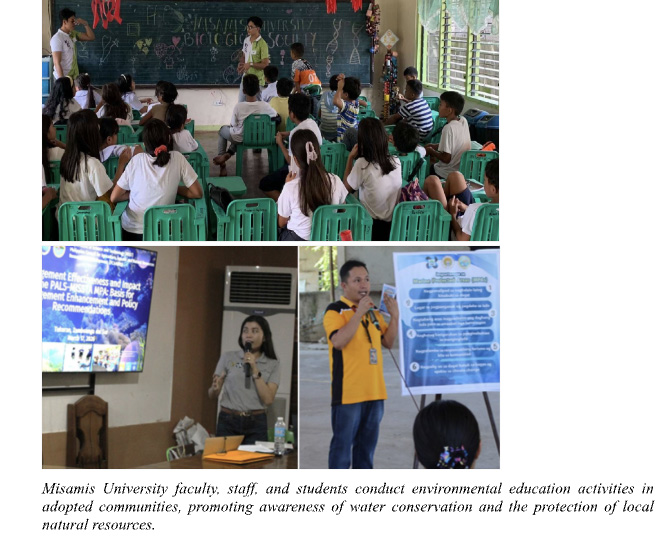
Beyond specific technical interventions, Misamis University promotes responsible water use through environmental education and community engagement. Through its Community Extension Program, the University reaches adopted barangays, schools, and community organizations across Ozamiz City, Misamis Occidental, and other provinces of Mindanao.
Faculty members, staff, and students conduct environmental classes and educational activities involving various sectors, including youth groups, women's organizations, and cooperatives. These engagements provide opportunities to share knowledge about responsible water use, water conservation, and the protection of local water resources.
By working with different groups and community organizations, the University recognizes that sustainable water management requires broad participation. Environmental education helps individuals understand the value of water, appreciate the importance of protecting natural resources, and recognize their role in promoting responsible water-use practices. Through these continuing efforts, Misamis University brings its environmental advocacy beyond the classroom and campus, encouraging communities to make water conservation part of their own practices and collective responsibilities.
BUILDING PARTNERSHIPS FOR WATER SECURITY AND WATERSHED PROTECTION
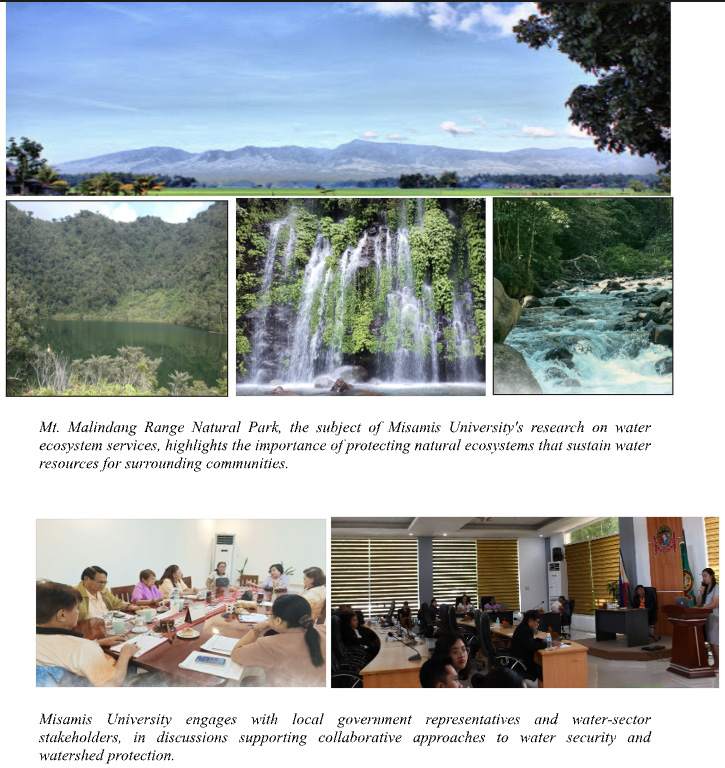
Water security requires more than the efforts of individual institutions and communities. It depends on collaboration among local governments, water districts, research institutions, and environmental stakeholders to protect water sources and support informed resource management. Misamis University contributes to this broader responsibility through its research on the water ecosystem services of Mt. Malindang Range Natural Park, published in the Philippine Journal of Science. The research provides scientific evidence on the value of the park's water resources and the ecosystem services that support surrounding communities.
Building on this scientific work, the University contributed to a Department of Science and Technology–Philippine Council for Agriculture, Aquatic and Natural Resources Research and Development (DOST-PCAARRD)-funded project that supported the development of a proposed Payment for Ecosystem Services (PES) ordinance. The proposed ordinance was endorsed by the Protected Area Management Board (PAMB), advancing discussions on mechanisms that recognize the value of ecosystem services and support watershed conservation.
The University's involvement also extends to stakeholder discussions and policy development. Director Grace V. Villanueva, Director of the University's Community Extension Program and a member of the PAMB, served as a resource person in discussions involving local government representatives and the Oroquieta City and Tangub City Water Districts. Through these engagements, Misamis University brings scientific knowledge and institutional expertise into conversations involving water security, watershed protection, and sustainable resource management. Its contribution demonstrates the role of higher education institutions not only in generating research but also in helping translate scientific findings into collaborative initiatives and informed policy discussions.
WATER STEWARDSHIP THAT GOES BEYOND BOUNDARIES
For Misamis University, water sustainability is not simply an institutional objective or a collection of environmental activities. It is a continuing responsibility reflected in how the University manages its resources, educates its people, supports communities, and works with partners to protect the environment.
From everyday conservation practices on campus and water harvesting at the MU Farm to hands- on community education, school-based technological innovations, and research-driven watershed initiatives, the University demonstrates that responsible water management must be practiced, shared, and sustained.
By strengthening conservation within its own operations, extending knowledge and practical solutions to communities, and collaborating with stakeholders for broader water security, Misamis University affirms a commitment that reaches beyond its campus boundaries.
Because protecting water is not the responsibility of one institution or one community alone. It is a shared commitment—and meaningful change begins when knowledge, action, and partnership come together.

Announcement

|
|
|
Photo Gallery
 International Conference on Social Sciences 2026 |
 DR. NESTOR M. FELICIANO DAY |
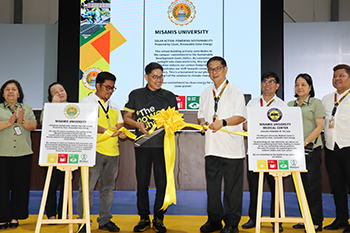 Turnover of solar energy management from WEGEN to MU |
Videos

|

|

|