

 28
Misamis University's Contributions to Aquatic Ecosystem Conservation and Sustainable Resource Management
Promoting the Conservation and Sustainable Utilization of Aquatic Resources
Misamis University supports the conservation and sustainable utilization of aquatic resources through academic conferences, student research colloquia, and collaborative educational activities. These initiatives provide opportunities for researchers, students, educators, and stakeholders to exchange scientific knowledge, raise awareness of environmental concerns, and discuss approaches to biodiversity conservation and sustainable resource management.
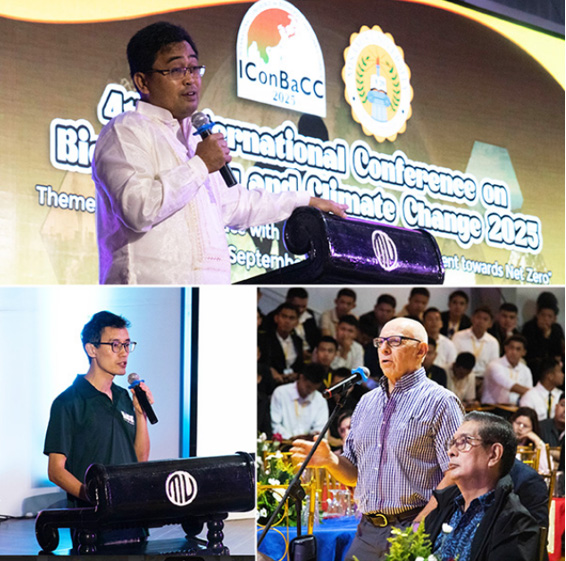
One of the University’s major initiatives is its Biannual International Conference on Biodiversity and Climate Change, conducted in 2025 under the theme “Sustainable Peace with Nature: A Global Commitment towards Net Zero.” The conference provided an academic platform for discussing biodiversity conservation, climate change mitigation, and environmental sustainability. By encouraging the exchange of research findings and ideas, the event promoted awareness of the need to protect natural ecosystems and use resources responsibly, including aquatic and marine resources.
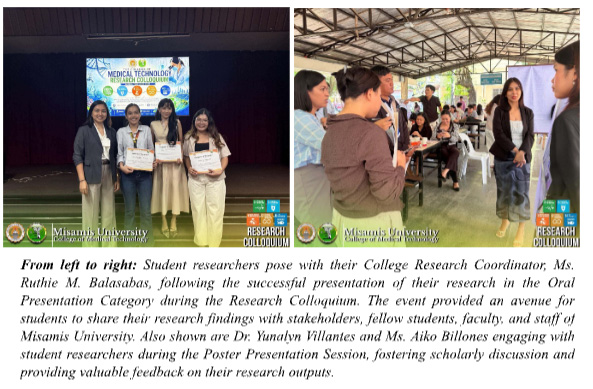
The College of Maritime Education (MU-CME) also contributes to marine environmental awareness through academic colloquia where students present research findings to stakeholders. These activities provide opportunities to discuss environmental issues affecting marine resources and coastal communities and to emphasize the importance of marine environmental protection, responsible resource utilization, and sustainable practices within the maritime sector.
Similarly, students from the College of Medical Technology have presented research concerning local aquatic environments during stakeholder-oriented research colloquia. These studies include research on Panguil Bay and the bacteriological quality of water from the Clarin River. Research on Panguil Bay contributes information relevant to the condition of a significant local coastal ecosystem, while the Clarin River study addresses water quality and potential contamination concerns. Presenting these findings provides opportunities to communicate scientific information and encourage discussions about aquatic ecosystem protection, water quality management, and public health.
Through these conferences and research presentations, Misamis University promotes scientific inquiry, environmental education, and stakeholder engagement. These activities help connect academic research with local environmental concerns and provide a foundation for informed discussions on aquatic ecosystem conservation and sustainable water resource management.
Institutional Policy on the Sustainable Sourcing of Aquatic Food Products
Misamis University promotes the responsible sourcing and consumption of aquatic food products served on campus through an institutional memorandum issued in 2024. The memorandum reinforces compliance with applicable fisheries conservation regulations, particularly Fisheries Administrative Order (FAO) No. 208, series of 2001, issued by the Bureau of Fisheries and Aquatic Resources (BFAR), concerning the conservation of rare, threatened, and endangered fishery species.
Under the University’s policy, campus food concessionaires are prohibited from purchasing, preparing, serving, or selling aquatic species whose taking, possession, or trade is prohibited under applicable laws and regulations. This measure supports the protection of vulnerable aquatic species and discourages food procurement practices that may contribute to the decline of threatened fishery resources. The University also expects food concessionaires to obtain seafood from legal and permitted suppliers and to comply with applicable requirements governing the acquisition, handling, and sale of aquatic products. Through these provisions, Misamis University promotes responsible seafood consumption and reinforces the importance of protecting aquatic biodiversity within the campus community.
To strengthen implementation and demonstrate compliance, the University may maintain copies of the memorandum, concessionaire agreements, supplier documentation, and monitoring records. These documents can provide evidence that the policy is communicated, implemented, and monitored in campus food-service operations.
Research and Engagement to Maintain and Protect Aquatic Ecosystems and Biodiversity
Misamis University collaborates with local government units (LGUs), national government agencies, and partner organizations to support the conservation, restoration, and sustainable management of ecosystems and biodiversity, particularly in coastal and marine environments. Through research, technical collaboration, stakeholder engagement, and participation in environmental planning, the University contributes scientific and academic perspectives to local conservation initiatives.
A major initiative is the Department of Science and Technology–Philippine Council for Agriculture, Aquatic and Natural Resources Research and Development (DOST–PCAARRD)-funded research project evaluating the effectiveness and ecological, economic, and community impacts of locally managed marine protected areas (MPAs) in the Zamboanga Peninsula. The project examines the role of locally managed MPAs in marine biodiversity conservation, ecosystem protection, and community well- being. Its findings can help identify management practices, inform conservation planning, and guide recommendations for improving the management of marine protected areas.
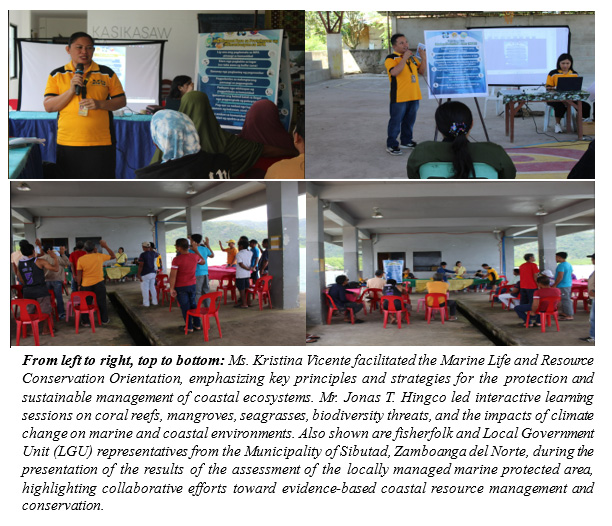
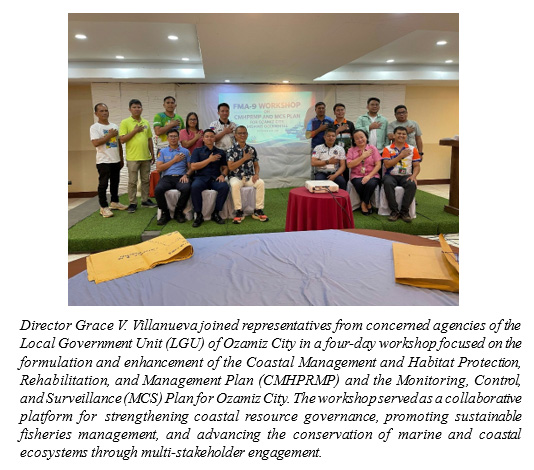
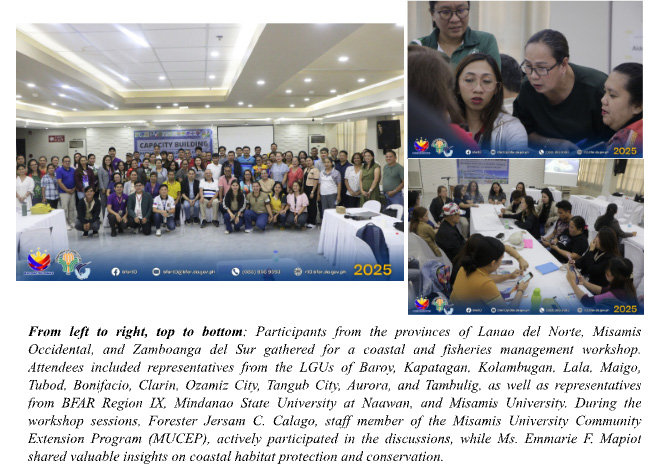
The University also participates in coastal resource management planning. It took part in a workshop organized by the Ozamiz City Agriculture Office and BFAR for the preparation of the Ozamiz City Coastal Resource Management Plan (CRMP). This engagement provided an opportunity for the University to contribute academic and research perspectives to collaborative planning for coastal resource conservation, fisheries management, and sustainable use of marine resources.
In addition, the University participated in a planning workshop of the Panguil Bay Development Council for the preparation of the Panguil Bay Development Plan. This participation supported discussions on development and environmental management concerns affecting Panguil Bay and its surrounding coastal communities. Through this engagement, the University contributed to a stakeholder process concerned with the sustainable management of aquatic resources and the long-term ecological health of the bay.
Misamis University’s environmental partnerships also include its participation in the Iligan Bay Alliance of Misamis Occidental (IBAMO) and the Protected Area Management Board (PAMB) of the Baliangao Protected Landscape and Seascape (BPLS). These partnerships provide avenues for engagement with local stakeholders and protected-area management institutions in support of environmental education, biodiversity conservation, and sustainable coastal and marine resource management. Within the BPLS PAMB, the University’s role in chairing the Information, Education, and Communication Committee further supports environmental awareness and public participation through educational materials and information-dissemination activities.
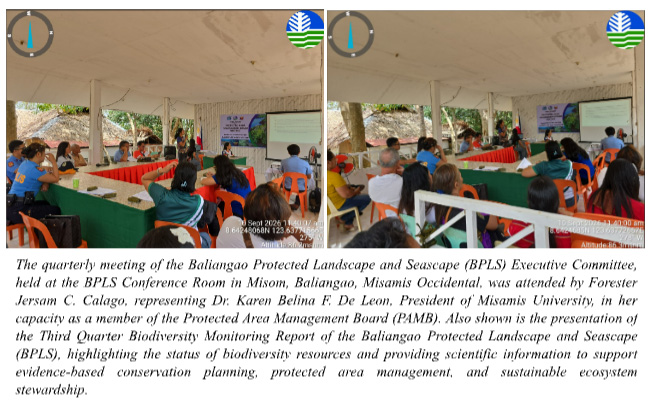
Collectively, these research and engagement initiatives demonstrate the University’s participation in science-based conservation, environmental planning, and collaborative management of aquatic ecosystems. Their documented outputs, including research reports, meeting records, management recommendations, and educational materials, can further demonstrate the University’s contribution to protecting aquatic habitats and biodiversity.
Research and Technical Practices to Minimize Damage to Aquatic Ecosystems
Misamis University contributes to the development and application of practices that can help minimize damage to aquatic ecosystems through marine research, ecological assessments, geospatial mapping, and collaboration with coastal resource management institutions. These activities generate information that can support evidence-based decisions on the protection and sustainable use of marine and coastal environments.
The DOST–PCAARRD-funded project on the Management Effectiveness and Impacts of Locally Managed Marine Protected Areas (MPAs) in the Zamboanga Peninsula is one example. By examining ecological, economic, and community-level considerations associated with locally managed MPAs, the project can help identify management approaches that support marine biodiversity conservation and reduce pressures on vulnerable ecosystems. Another technical component of the University’s work is MPA mapping and spatial assessment. Geospatial mapping can provide information on the location and extent of protected areas, support the identification of priority conservation sites, and inform planning and monitoring activities. When used alongside ecological and resource assessments, spatial information can help local stakeholders make more informed decisions about habitat protection and the sustainable use of coastal and marine resources.
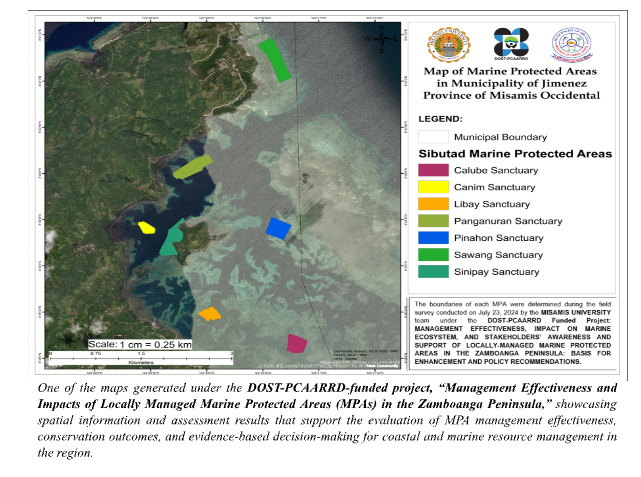
The University also conducts ecological and resource assessments involving water quality, coral reefs, seagrass beds, mollusks, and mangrove ecosystems. These assessments provide information about aquatic habitats and associated biodiversity. Depending on the findings, the information can help identify environmental pressures, inform pollution-prevention measures, and guide local government units and coastal communities in developing appropriate conservation and resource management strategies. The University’s participation in IBAMO, the Panguil Bay Development Council’s planning activities, and the preparation of the Ozamiz City CRMP further provides opportunities to share scientific and environmental perspectives with stakeholders responsible for coastal resource management. Such collaboration can help incorporate research findings and conservation considerations into local planning and decision-making.
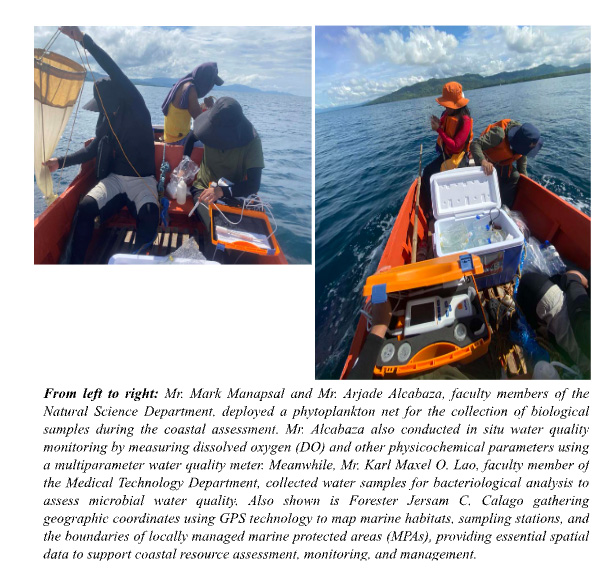
Through these initiatives, Misamis University contributes research, technical information, and stakeholder engagement that can support practices intended to reduce habitat degradation and protect aquatic biodiversity. Documenting the specific mapping outputs, assessment results, technical recommendations, and management practices adopted by partner institutions would further demonstrate the practical contribution of these activities to minimizing damage to aquatic ecosystems.
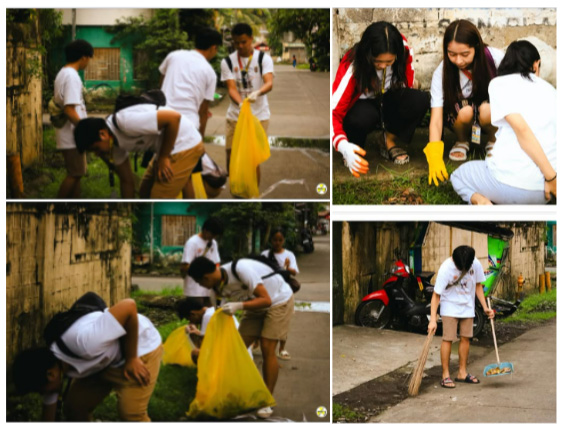
Additionally, on February 1, 2025, the NSTPC226RT students, under the guidance of their NSTP instructor, Mr. Bobby Alaman, participated in a community service activity at the 50th Barangay, Ozamiz City. Through collective effort, volunteerism, and civic engagement, the students contributed to maintaining a cleaner, healthier, and more empowered community. This initiative reflects Misamis University's commitment to fostering social responsibility and active citizenship among its students through meaningful community involvement and service-learning opportunities. As Mahatma Gandhi aptly stated, “The best way to find yourself is to lose yourself in the service of others.” The activity demonstrated how small acts of service can create a positive and lasting impact on the community.
Misamis University contributes to aquatic ecosystem conservation through environmental education, research, institutional policy, technical assessment, and collaboration with government agencies and environmental management organizations. Its academic conferences and research colloquia promote awareness and knowledge-sharing; its campus food-service policy supports compliance with fisheries conservation requirements; and its research projects, ecological assessments, mapping activities, and participation in coastal planning processes contribute scientific information to aquatic resource management.

Announcement

|
|
|
Photo Gallery
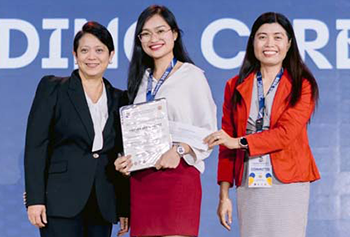 International Conference on Social Sciences 2026 |
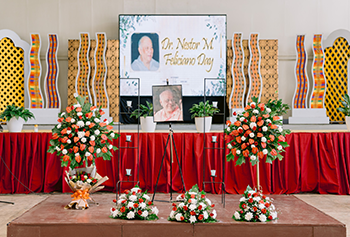 DR. NESTOR M. FELICIANO DAY |
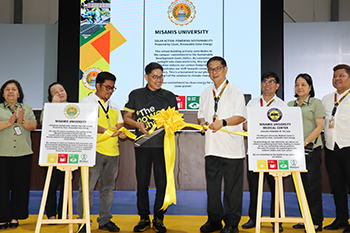 Turnover of solar energy management from WEGEN to MU |
Videos

|

|

|