

 30
Progress Report on SDG 6: Clean Water and Sanitation for Academic Year 2025-2026
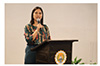
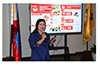
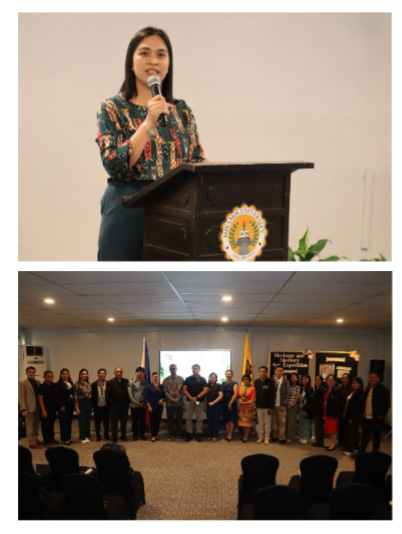
The report on SDG 6: Clean Water and Sanitation was presented by Dr. Yunalyn Villantes, University Research Coordinator at Misamis University, on October 30, 2026, during the 17 UN Sustainable Development Goals (SDG) Validation. Participants included deans, administrators, faculty members, students, stakeholders, alumni, and guests from the Department of Environment and Natural Resources Provincial Office, the Department of Agriculture-Ozamiz City, the Disaster Risk Reduction and Management Office (DRRMO)-Ozamiz City, the Economic Enterprise Development Office (CEEDO)-City Government of Ozamiz, the Tourism Office-Ozamiz City, and provincial and city libraries. The event was held at the Function Hall on the Misamis University campus in Ozamiz City.
The overall report is as follows:
Water Consumption and Monitoring
The University measures and monitors water drawn from campus aquifers, documenting consumption by building and area, estimated usage, number of users, and per-person daily use. During the reporting period, its campus population was 9,048, with average monthly water consumption of 4,694.138 m³, approximately 17.30 liters per person per day based on a 30-day estimate. This is an institutional average, not an estimate of each person’s individual use.
Wastewater Treatment and Pollution Prevention
Misamis University treats wastewater from laboratory activities through a five-stage treatment facility at its Natural Science Laboratory. University personnel monitor and inspect the facility. Pollution prevention efforts also include community waterway cleanups, the campus Clean As You Go (CLAYGO) policy, and environmental orientations for students, faculty, and staff.
Safe Drinking Water and Water-Efficient Facilities
The University provides free drinking water through four campus fountains and regularly monitors water potability. Its buildings use dual-flush toilets, with approximately 6-liter full flushes and 3-liter half flushes, supported by signage encouraging appropriate use.
Water-Smart Landscaping and Reuse
Campus landscaping includes native trees and drought-tolerant plants to reduce watering needs, provide shade, and support biodiversity. The University also incorporates water conservation and reuse into its practices. For example, swimming-pool water can serve as an additional firefighting resource through a connection with the Bureau of Fire Protection–Ozamiz City.
Community Water Education and Conservation
Through its Community Extension Program and partnership with the Linusas-Laburak Cooperative, the University supports water-management education in Barangay Stimson Abordo. Activities include inspecting community water systems, identifying leaks, assessing storage capacity, and testing water samples. Other outreach includes demonstrating an automated handwashing system at Montol National High School to promote sanitation and controlled water use.
Water Security and Sustainable Extraction
At its MU Farm in Capucao, the University uses two large water-harvesting tanks to support crop production, irrigation, and educational and research activities. It also works with local governments, water districts, and protected-area stakeholders on watershed conservation and water security, including research and policy discussions related to Mt. Malindang Range Natural Park.
Overall Assessment
Misamis University’s reported SDG 6 activities demonstrate a broad commitment to responsible water use, safe sanitation, conservation, and community engagement. Strengths include institutional water monitoring, laboratory wastewater treatment, accessible drinking water, water-efficient fixtures, water harvesting, and collaboration with local communities and government partners.

Announcement

|
|
|
Photo Gallery
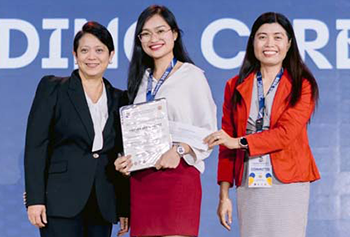 International Conference on Social Sciences 2026 |
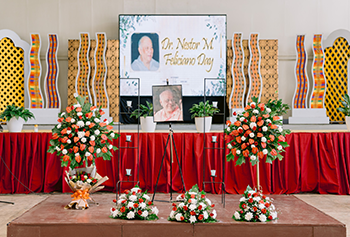 DR. NESTOR M. FELICIANO DAY |
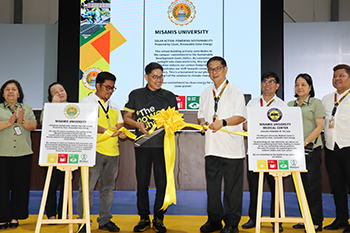 Turnover of solar energy management from WEGEN to MU |
Videos

|

|

|