

 31
Misamis University’s Policy and Practices for Ending Workplace Discrimination and Advancing Inclusion
Misamis University has an institutional Policy on Ending Discrimination in the Workplace that affirms its commitment to a fair, inclusive, respectful, and discrimination-free working environment. The policy is anchored in the University’s Philosophy, Vision, Mission, Goals, and Objectives, particularly its core value of Inclusivity, and is supported by the Manual on Governance, Administrative Handbook, Faculty Handbook, and ISO 21001:2018. It prohibits discrimination, harassment, exclusion, victimization, and retaliation based on religion or belief, sex, sexual orientation, gender identity or expression, age, disability, race, ethnicity, nationality, civil status, pregnancy, health condition, socioeconomic status, political opinion, or any other protected characteristic.
The policy applies to applicants and all categories of University personnel, including regular, probationary, part-time, contractual, visiting, and international employees. It promotes equal opportunity and merit-based decision-making in recruitment, appointment, compensation, workload distribution, promotion, training, scholarship opportunities, performance evaluation, benefits, discipline, contract renewal, and termination. Employment decisions are based on qualifications, competence, experience, performance, and legitimate position requirements, not on personal identity or protected characteristics.
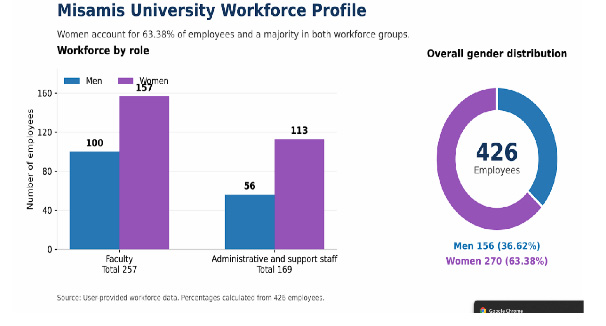
The University’s workforce profile provides measurable evidence of gender inclusion. Of the 426 employees, 257 are faculty members (100 men and 157 women), while 169 are administrative and support staff (56 men and 113 women). Overall, the workforce comprises 156 men (36.62%) and 270 women (63.38%). Women therefore represent almost two-thirds of the University’s employees, showing substantial participation in both academic and administrative functions. See Figure 1. Workforce Profile.
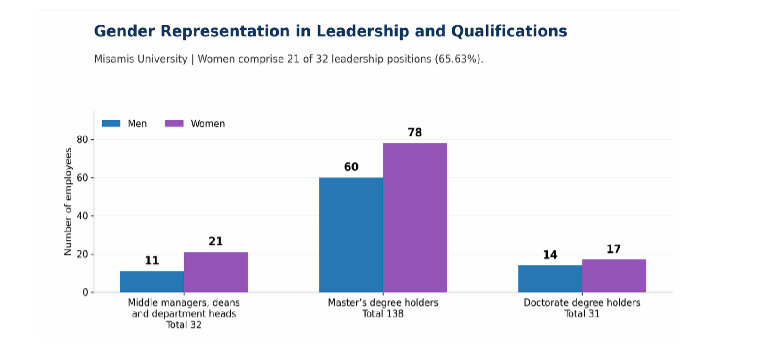
Gender inclusion is also reflected in leadership and professional qualifications. Among 32 middle managers, deans, and department heads, 11 (34.38%) are men and 21 (65.63%) are women. This indicates that women are well represented in the workforce and participate significantly in academic and administrative decision-making. Among employees with master’s degrees, 60 are men, and 78 are women, for a total of 138. Among doctorate degree holders, 14 are men, and 17 are women, for a total of 31. These figures show that professional development and leadership opportunities are accessible regardless of sex. See Figure 2. Gender Representation in Leadership and Qualification.
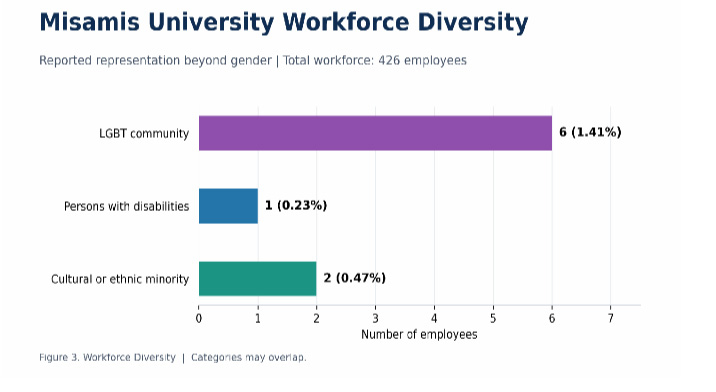
The University’s workforce profile reflects dimensions of diversity beyond gender. Of its 426 employees, six (1.41%) identify as members of the LGBT community, one (0.23%) is a person with a disability, and two (0.47%) identify as members of cultural or ethnic minority groups. These categories may overlap with one another and with other workforce classifications. Because disclosure is voluntary, the figures reflect the information employees have chosen to share. The University reports these data only in aggregate to protect privacy and confidentiality. Employees may choose whether to disclose this information without affecting their employment or access to University benefits and opportunities.
The university provides accommodation to qualified persons with disabilities, employees with health-related needs, pregnant employees, and personnel requiring religious or cultural consideration, provided that the accommodation is reasonable, lawful, and does not impose disproportionate hardship or compromise essential institutional requirements. University facilities, work arrangements, communication methods, and employment practices are progressively reviewed to identify and remove physical, procedural, attitudinal, and communication barriers.
Employees and applicants may report discrimination, harassment, exclusion, or retaliation through confidential and accessible channels, including the Human Resource Management Office, immediate supervisor, unit head, designated grievance or investigation committee, or senior University administration. Complaints involving a supervisor may be elevated directly to a higher authority. Reports are documented, assessed, and investigated impartially, with due process provided to all concerned. The University protects good-faith complainants, witnesses, and persons assisting in an investigation against retaliation. Confirmed violations may result in corrective action, reasonable accommodation, restoration of denied opportunities or benefits, counseling, training, disciplinary action, or referral to competent authorities, depending on the offense's seriousness.
Implementation is monitored through workforce-disaggregation data, recruitment and promotion records, compensation reviews, leadership representation, participation in training and professional development, reasonable-accommodation requests, employee grievances, investigation outcomes, institutional climate surveys, internal audits, and Management Review. Data are analyzed carefully to identify possible disparities, while personal and sensitive information is protected in accordance with applicable privacy requirements. Findings are used to improve policies, remove barriers, strengthen employee support, and promote continual improvement under ISO 21001:2018.
Through this policy and its measurable workforce outcomes, Misamis University demonstrates compliance with THE SDG 8 requirements on ending workplace discrimination. It particularly advances SDG 8.5 on full and productive employment, equal opportunity, and equal pay for work of equal value; SDG 5 on gender equality and women’s leadership; SDG 10 on reducing inequalities; and SDG 16 on inclusive and accountable institutions. The University’s diverse workforce, strong female representation, inclusive leadership, confidential grievance mechanisms, and protection of vulnerable groups affirm that inclusivity is not merely a stated institutional value but a principle translated into employment practices and organizational life.

Announcement

|
|
|
Photo Gallery
 International Conference on Social Sciences 2026 |
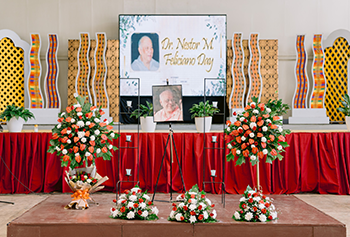 DR. NESTOR M. FELICIANO DAY |
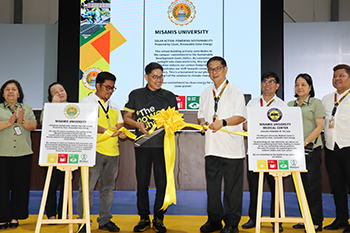 Turnover of solar energy management from WEGEN to MU |
Videos

|

|
|