

 27
Equitable Remuneration and Gender Pay Equity at Misamis University
Misamis University commits to equitable remuneration and the progressive elimination of unjustified gender-based pay gaps. Its approved salary structures provide a common basis for compensating employees who perform the same or substantially comparable work. Differences in pay must be supported by documented employment factors, such as position classification, qualifications, rank, relevant experience, workload, responsibility, performance, and length of service. This approach supports equal remuneration for work of equal value across teaching and non-teaching positions.
Pay equity begins at appointment. The applicable entry pay grade or salary range is determined by the position’s duties and qualification requirements, and Human Resources reviews appointment recommendations and contracts before approval. Any proposed rate outside the established range should have a documented justification and follow the required approval process. This review helps prevent differences in starting pay that cannot be explained by the requirements of the position or the applicant’s relevant qualifications.
For teaching personnel, the Faculty Ranking System provides established criteria for appointment, compensation, and advancement. These include educational attainment, academic rank, teaching experience, professional credentials, research and scholarly work, community engagement, and institutional service. The Staff Ranking and Position Classification System evaluates non-teaching positions according to work complexity, required competencies, accountability, supervisory responsibility, and organizational level. Applying the same criteria within each system enables the University to compare employees in equivalent roles and explain differences between salary grades.
Pay equity also depends on decisions made after hiring. Salary increases, promotions, rank advancement, allowances, and incentives can change employees’ earnings over time. The University therefore applies approved criteria to these decisions and retains the supporting evaluations and approvals. Human Resources reviews pay changes within comparable ranks, positions, and grades to identify inconsistent treatment. To measure whether its controls are effective, MU commits to an annual gender-disaggregated pay-equity review covering faculty and staff. The review should compare starting rates, average and median basic pay, and total compensation within relevant positions, ranks, grades, and employment categories. It should also examine annual increases, allowances, incentives, promotion and rank-advancement rates, full- time and part-time status, and representation in supervisory and senior leadership roles.
When a gap is identified, Human Resources examines its cause using appointment, ranking, workload, performance, and payroll records. A difference supported by documented job-related factors is recorded with its explanation. An unexplained or unjustified difference is referred for corrective action, which may include a salary adjustment, correction of a classification, review of an appointment or promotion decision, or revision of criteria that produce inconsistent outcomes. The responsible office, action taken, and follow-up result should be documented so management can determine whether the gap was resolved. Employees may also raise compensation concerns through confidential grievance channels without retaliation.
The annual review should inform budgeting, salary-scale updates, workforce planning, and Management Review under MU’s ISO 21001:2018-aligned system. Management can track results through measures such as the number of pay differences reviewed, the number requiring correction, the time taken to resolve them, and changes in pay and promotion gaps over successive years. Individual payroll information remains confidential; reports to management can present aggregated findings and the status of corrective actions.
Implementation is supported by approved salary schedules, position descriptions, faculty and staff ranking records, appointment and promotion decisions, payroll registers, payslips, pay- review reports, and corrective-action records. MU also maintains documentation for applicable CHED requirements on the allocation of tuition-fee incremental proceeds and monitors compliance with DOLE requirements on wages, benefits, deductions, working hours, and timely payment. These records allow the University to demonstrate how pay decisions were made and, once annual review results are available, whether identified gender pay gaps have been reduced or resolved.

Announcement

|

|

|
Photo Gallery
 International Conference on Social Sciences 2026 |
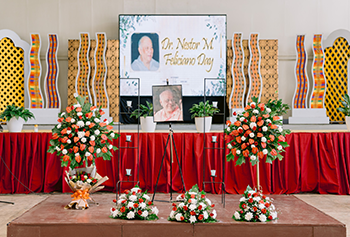 DR. NESTOR M. FELICIANO DAY |
 Turnover of solar energy management from WEGEN to MU |
Videos

|

|

|