

 28
Overall Progress Report on SDG 1 No Poverty for Academic Year 2025-2026
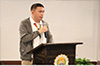
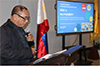
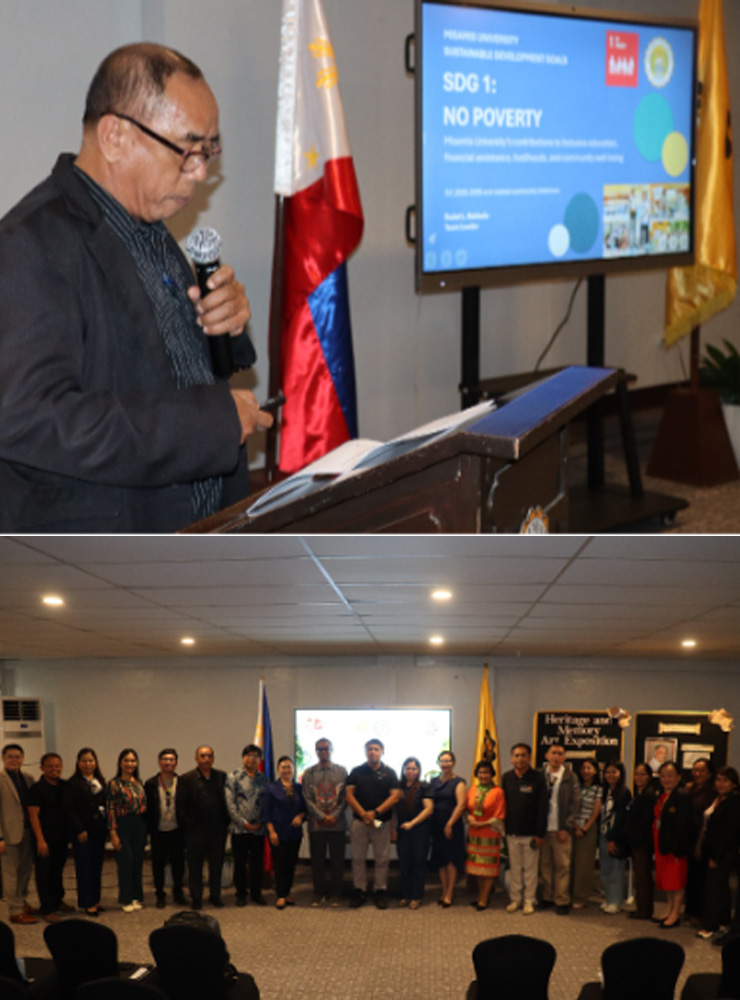
The report on SDG 1: No Poverty was presented by Rodel Baldado, Director of Student Affairs at Misamis University, on October 30, 2026, during the 17 UN Sustainable Development Goals (SDG) Validation. Participants included deans, administrators, faculty members, students, stakeholders, alumni, and guests from the Department of Environment and Natural Resources Provincial Office, the Department of Agriculture-Ozamiz City, the Disaster Risk Reduction and Management Office (DRRMO)-Ozamiz City, the Economic Enterprise Development Office (CEEDO)-City Government of Ozamiz, the Tourism Office-Ozamiz City, and provincial and city libraries. The event was held at the Function Hall on the Misamis University campus in Ozamiz City.
The overall report is as follows:
Student access and financial assistance
During School Year 2025–2026, the University reported 8,092 students and provided financial aid to 5,136 low-income students through government programmes such as the Tertiary Education Subsidy (TES) and Tulong Dunong Program (TDP). This comprises 2,747 recipients in the first semester and 2,389 in the second semester. The report identifies these recipients as students who qualify for TES or TDP.
The University admitted students from low-income households in Ozamiz City and Misamis Occidental, with scholarships and subsidies helping reduce financial barriers to university access. It supports students’ progress and completion: 857 TES and TDP recipients graduated in Academic Year 2025–2026.
Support for student retention and completion
A range of financial and practical support is available to help students continue their studies. Reported initiatives include government-funded scholarships serving 2,489 beneficiaries, academic-achiever and honor scholarships serving 836 beneficiaries, and the SAFE Loan and PGMA Loan programmes. Across Academic Years 2025–2026 and 2026–2027, 41 students received loans totaling PHP 1,077,903.85. The Student Aides Program also provided work opportunities outside class hours to 179 students in Academic Year 2025–2026. Legal assistance and referral services are available through the Misamis University Legal Assistance Bureau and Advocacy Network (MU-LABAN).
Academic and personal support includes peer tutoring through the Misamis University League of Academic Scholars, mentoring and guidance through the Misamis University Peer Facilitators and the Guidance and Testing Center, and academic advising within each programme. Together, these measures address both financial and academic challenges that may make it difficult for low-income students to complete their studies.
Community livelihoods and economic opportunity
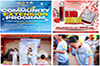
Beyond student support, the University contributes to local economic development through community extension and enterprise initiatives. Activities include business and financial- management training for the Linusas-Laburak Cooperative; sustainable gardening and hydroponics training in Barangay Barra; sewing equipment for women in Barangay Guimad to support a local tailoring livelihood; and agricultural entrepreneurship training, tools, seeds, and fertilizers for women and youth in Barangay Barra.
Access to basic services and policy engagement
University programmes support access to healthcare, dental care, nutrition, sanitation, education, and environmental services for students, employees, and nearby communities. Examples include the PhilHealth YAKAP Clinic, medical and dental outreach, nutrition and sanitation education, feeding activities, literacy and tutoring support, community gardening, and environmental clean-ups. Reported dental outreach activities included distributing 35 dental kits, providing tooth extractions to 25 pupils, and conducting fluoridation.
Misamis University also participates in local, regional, and national initiatives related to environmental management, research, and sustainable livelihoods. Its reported contributions include community capacity-building with DENR in 65 buffer-zone barangays around Mt. Malindang Range Natural Park; participation in protected-area boards and regional research consortia; and research and planning partnerships supporting ecosystem services, conservation financing, and protected-area management. These activities contribute to poverty reduction by supporting sustainable natural resources and the communities that depend on them.
Overall assessment
Misamis University is addressing SDG 1 through a combination of student financial aid, completion support, livelihood development, access to basic services, and policy-related engagement. The clearest quantified results are the 5,136 low-income student recipients of TES and TDP, 857 supported students who graduated in AY 2025–2026.

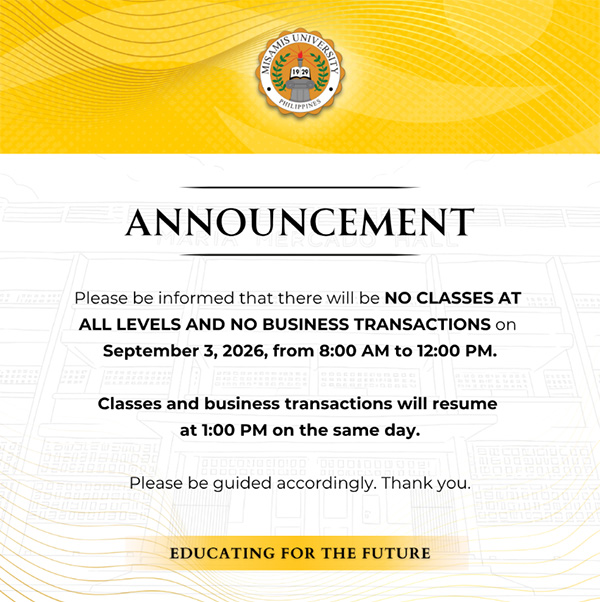
Announcement
|
|
|
Photo Gallery
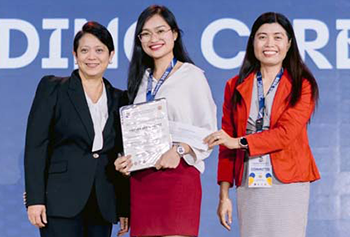 International Conference on Social Sciences 2026 |
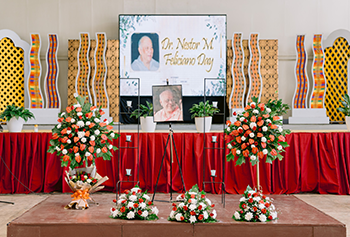 DR. NESTOR M. FELICIANO DAY |
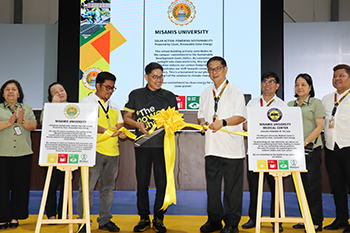 Turnover of solar energy management from WEGEN to MU |
Videos

|

|

|