

 30
Misamis University Advances Sustainability through Waste Diversion Research
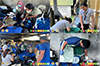
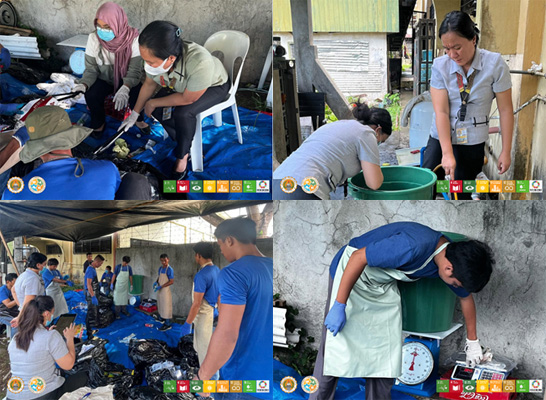
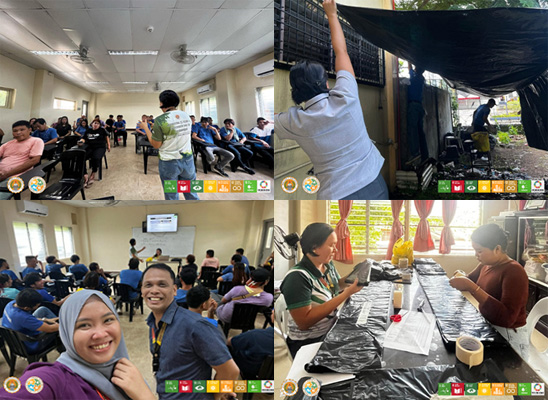
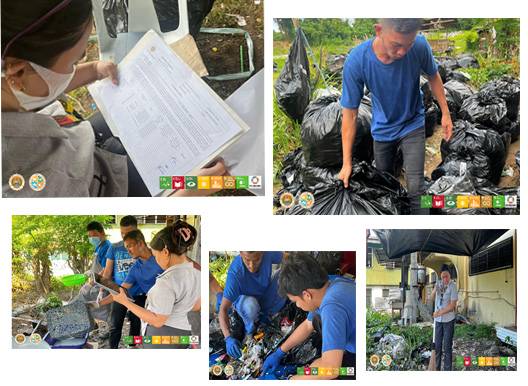
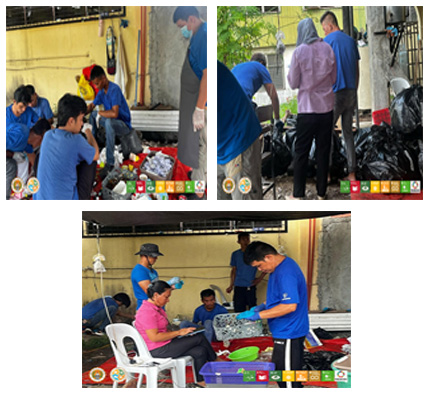
Misamis University has officially concluded its comprehensive Waste Assessment Characterization Study (WACS), a university funded project, conducted last August 24 to August 30, 2026, In a major step toward structural environmental sustainability.
The baseline waste audit was spearheaded by the University’s Pollution Control Officer Jersam C. Calago, with coordination with the VP Office Admin, colleges, departments, and utility personnel. The study provides the university with a clear, statistically grounded baseline of its daily waste generation, emphasizing a massive opportunity for environment and operational transformation on campus.
According to the study's primary data, which covers the six complete operational days from August 24 to August 29, Misamis University generated a total of 2,003.22 kilograms of waste. This translates to a highly consistent daily average of 333.87 kilograms.
Statistically, the school's daily waste output exhibits a standard deviation of 25.41 kilograms and a remarkably low coefficient of variation of 7.61%. This low variability proves that the university’s waste generation is a stable, predictable outcome of regular daily activities, allowing university to plan recovery programs with high accuracy.
To ensure the absolute credibility of the research, For. J. Calago and the analytical team isolated the records for August 30, which showed an extreme low of only 6.29 kilograms.
"Combining this day uncritically with our primary baseline would have misleadingly dragged our daily generation estimates down to 287.07 kilograms," explained PCO Calago. "By treating August 30 separately as a partial weekend data collection day, we preserve a transparent, mathematically defensible daily baseline of 333.87 kilograms".
The composition analysis of Misamis University's waste stream reveals that just three categories control 94.31% of the campus's total waste:
1. Biodegradables (43.69% / 876.35 kg): Food scraps and organic garden waste dominate the trash bins, ranking as the single largest category and representing our highest-priority stream for a campus-wide composting program.
2. Residuals for Disposal (26.12% / 523.82 kg): Non-recyclable packaging and wrappers represent the portion of waste destined for final landfill disposal, highlighting our main target for future canteen procurement reforms, waste minimization, no single-use plastic & others.
3. Recyclables (24.50% / 491.30 kg): High-value plastic beverage bottles (PET #1), paper, and cartons make up nearly a quarter of our footprint, representing an immediate recovery opportunity through standardized sorting bins.
The remaining fraction is composed of Residuals with Potential for Recycling (3.26% / 65.47 kg) and Special Waste (2.43% / 48.67 kg), which includes hazardous and healthcare items requiring controlled handling and specialized disposal.
The most significant finding of the study is the school's 71.20% waste diversion potential. This means that out of the 2,003.22 kg generated, a massive 1,433.12 kg is potentially divertible through organic composting, materials recovery, and upcycling initiatives.
The WACS report emphasizes that this 71.20% is a mass-based potential diversion rate rather than a current actual recovery rate, representing a target ceiling for the school's upcoming campaigns.
By studying its waste streams, Misamis University will plan, make policies to reduce its waste and improve environmental footprint by is actively preparing its students, faculty, and vendors to lead the way toward a cleaner, sustainable future.

Announcement
|
|

|
Photo Gallery
 International Conference on Social Sciences 2026 |
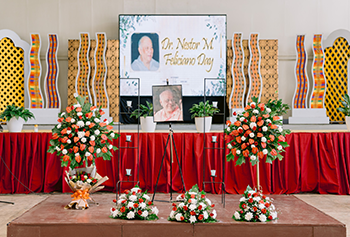 DR. NESTOR M. FELICIANO DAY |
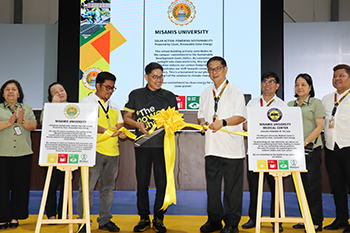 Turnover of solar energy management from WEGEN to MU |
Videos

|

|
|