

 44
Misamis University's International Collaborations for Gathering SDG Data and Improving Student Learning Outcomes Through Benchmarking and Best Practices
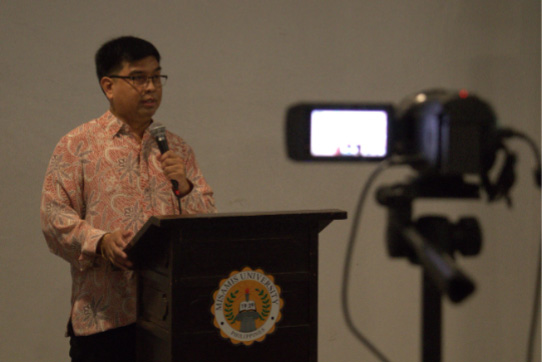
Misamis University gathers information on its collaborative activities with international university partners to assess how they address the United Nations Sustainable Development Goals (SDGs). This includes discussing how activities are planned, reviewing their outcomes, and collecting and sharing participant feedback to inform future initiatives. The activities are as follows:
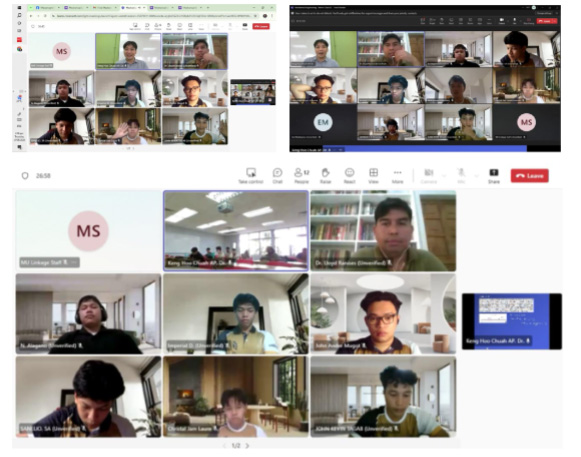
1. Mirror Classes on Essential Concepts: Physical Origins in Heat Transfer
The College of Engineering and Technology at Misamis University held online mirror classes with Prof. Chuah of INTI International University, Negeri Sembilan, Malaysia, on August 19 and 21, 2025, from 1:00 to 2:30 p.m. The sessions took place in the Function Hall on the Misamis University campus.
Associate Professor Ir. Dr. Chuah Keng Hoo, Interim Dean of the Faculty of Engineering and Quantity Surveying at INTI International University, delivered a lecture entitled “Essential Concepts: Physical Origins” as part of the Heat Transfer course. Engr. Noelben Alagano of Misamis University facilitated the session. Ten (10) Mechanical engineering students attended the online class.
2. Mirror Classes on Deep Foundations in Foundation Engineering
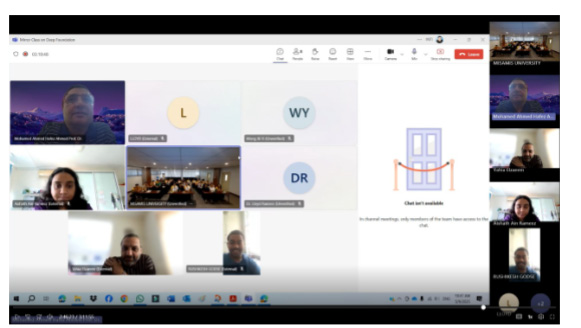
A mirror class with Prof. Dr. Mohamed Ahmed Hafez Ahmed of INTI International University, Malaysia, was held on September 5, 12, 19, and 26, 2025, from 8:00 a.m. to 11:00 a.m. in the Function Hall on the Misamis University campus. Dr. Hafez lectured on deep foundations as part of the Foundation Engineering course for 35 Misamis University Civil Engineering students. Engr. Genelyn Caritos, a faculty member of the Civil Engineering program, facilitated the sessions on campus.
3. Mirror Classes on Derivation of Stiffness in Structural Analysis
A mirror class with Dr. Nor Jihan Abd Malek of INTI International University, Malaysia, was held on August 26, 2025, from 9:00 a.m. to 12:00 p.m. Dr. Malek lectured on the derivation of stiffness as part of the Structural Analysis 2 course. The session was attended by two class sections, comprising a total of 50 Civil Engineering students.
4. International Dialogue on Sustainability During the United Nations Day Celebration
In addition to offering online mirror or joint classes with international partner institutions, Misamis University held a sustainability dialogue titled “Panel Discussion among Directors for Community Engagement at Their Respective Universities.” This activity was part of the 2025 United Nations Day celebration, themed “Towards 2030: Deepening Our Commitment to the UN Sustainable Development Goals.” It took place on November 13, 2025, at the Function Hall of Misamis University.
The dialogue featured directors and representatives responsible for community engagement at the partner institutions. The resource persons were Dr. Ing. Farid Wajdi, M.Sc., of Universitas Serang Raya, Indonesia; Dr. Sularso Budilaksono of Universitas Persada Indonesia YAI, Jakarta, Indonesia; Drs. Bawa Mulyono Hadi, M.M., of Akademi Sages, Indonesia; and Engr. Marvin Calpito of Panpacific University, Philippines. They shared sustainability practices adopted by their respective institutions.
Selected students from Misamis University and its partner universities also shared their experiences and perspectives on student participation in sustainability programs. They were Bonife Leo O. Lubay and Joshua Paul D. Agustin of Misamis University, Philippines; Khalil Fhil Meade and Shaheed A. Jalad of Universidad de Zamboanga, Philippines; Luthfiyah Salsabila and Sofyan Abdilah Wijaya of Universitas Amikom Purwokerto, Indonesia; and Nafila Fakhrurriza of Akademi Bakti Palang Merah Indonesia, Indonesia.
A total of 110 participants from the University’s eleven colleges attended the dialogue and participated in the discussions.
5. International Lecture on Mental Health
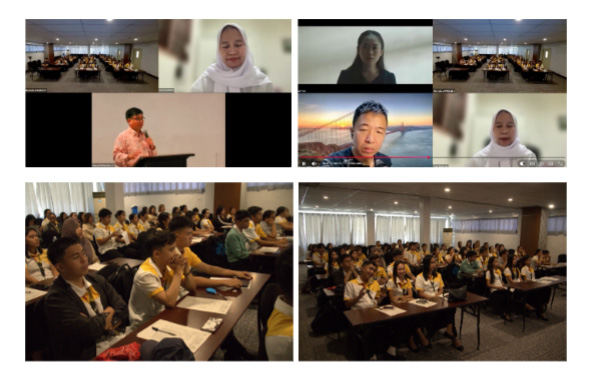
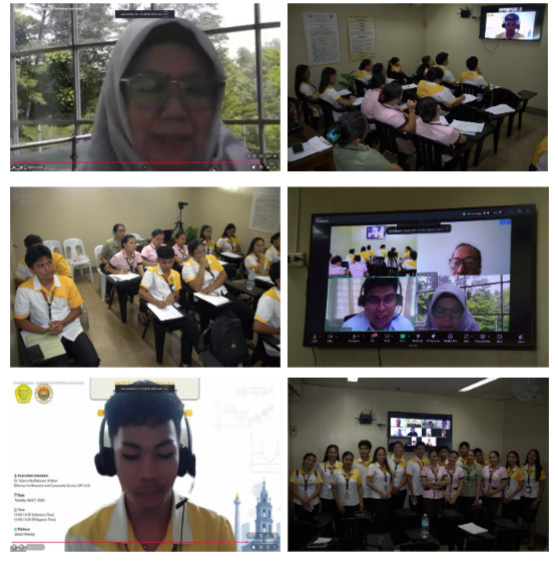
As another form of online learning, Misamis University held an international lecture on mental health in collaboration with the Faculty of Psychology at Universitas Persada Indonesia YAI (F.PSI UPI Y.A.I.) in Jakarta, Indonesia. The lecture took place on April 1, 2026, from 2:00 to 4:00 p.m. Philippine time. It was delivered via Zoom, provided by UPI YAI, while participants gathered in the Function Hall on the Misamis University campus. The lecture aimed to provide students with evidence-based knowledge, practical strategies, and cross-cultural perspectives on mental health, while strengthening regional cooperation and improving the quality of mental health education. Specifically, it aimed to provide Social Work students with evidence-based knowledge and practical strategies; deepen their understanding of mental health issues from regional and cross-cultural perspectives; strengthen academic partnerships between Misamis University and Indonesian higher education institutions; and prepare students to apply what they learned to mental health challenges in their communities.
Ms. Dewi Syukriah of Universitas Persada Indonesia YAI (UPI Y.A.I.), Jakarta, Indonesia, served as the resource person and delivered the lecture. Participants included 34 second-year students and 30 Bachelor of Science in Social Work students from Misamis University, as well as second-year students from the Faculty of Psychology at UPI Y.A.I. Students from both universities participated by asking questions and sharing their insights on mental health issues in their respective countries and communities. The discussion covered relevant Philippine laws and compared them with those in Indonesia. It also explored beliefs and practices related to health conditions that are widely recognized or publicly discussed in Indonesia, broadening participants’ perspectives on mental health in both countries.
6. International Lecture on Derivatives and Integrals
Misamis University also held an international lecture entitled “Application of Derivatives and Integrals” in collaboration with the Faculty of Engineering at Universitas Persada Indonesia Y.A.I. in Jakarta, Indonesia. The lecture took place on April 7, 2026, from 2:00 to 4:00 p.m. Philippine time. It was delivered via Zoom, with participants gathered at the Function Hall on the university campus. The lecture aimed to strengthen students’ understanding of the applications of derivatives and integrals; enhance their analytical and mathematical problem-solving skills; expose them to different approaches and perspectives on solving mathematical problems; and enable them to apply the concepts they learned to practical, real-world situations.
Dr. Sularso Budilaksono, Director of the Research and Community Service Institute at Universitas Persada Indonesia Y.A.I., served as the resource person and delivered the lecture. Participants included two Bachelor of Science in Mathematics students and 13 Bachelor of Secondary Education students majoring in Mathematics from Misamis University, as well as engineering students from the Faculty of Engineering at UPI Y.A.I. Through the examples presented, students explored how the concepts and solutions could be applied in various fields, including business, engineering, planning, infrastructure, and marketing, etc.
7. International Lecture on the Indonesian Language with Universitas Amikom Purwokerto, Indonesia
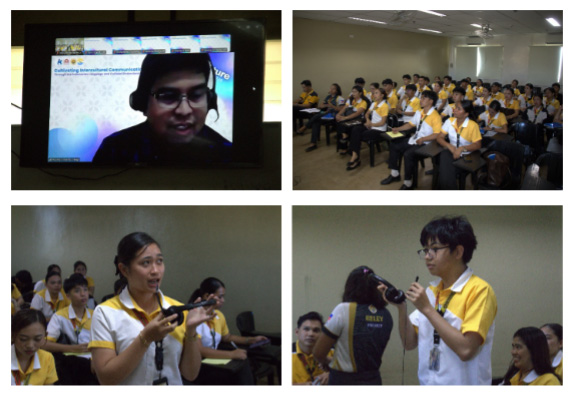
Misamis University held an international lecture on teaching the Bahasa Indonesia language in collaboration with Universitas Amikom Purwokerto, Indonesia. The lecture, entitled “Cultivating Intercultural Communication Through the Indonesian Language and Cultural Understanding for Students at Misamis University, Philippines,” took place on April 10 and 17, 2026, from 2:00 to 4:00 p.m. at the Oral Defense Room, Graduate School, on the university campus.
The program consists of three integrated components:
1. Basic Bahasa Indonesia Training. Students learned foundational vocabulary, daily conversation, and simple professional communication. Emphasis was placed on practical communication skills relevant to student exchanges and tourism;
2. Indonesian Cultural Literacy Session. These sessions introduced Indonesian social norms, values, diversity (ethnic, religious, and linguistic), academic culture, and professional etiquette. Students explored similarities and differences between Indonesian and Filipino cultures to build mutual understanding and regional awareness;
3. English Usage in Indonesia. This component explained the role of English in Indonesian education, business, and digital communication. Students learned about code-switching practices, English in formal vs. informal contexts, and strategies for effective communication with Indonesian partners who use English as a second or foreign language.
This component explored the role of English in Indonesian education, business, and digital communication. Students learned about code-switching, the use of English in formal and informal contexts, and strategies for communicating effectively with Indonesian partners who speak English as a second or foreign language. The exercises were designed for Hospitality students at Misamis University and helped them apply these skills in tourism-related situations. Dr. Ade Tuti Turistiati, M.I.R.H.R.M., Head of the Communication Science Program at Universitas Amikom Purwokerto, served as the resource person for the two-day training. Forty (40) Bachelor of Science in Hospitality Management students from Misamis University participated. The training equipped them with communication skills for interacting with tourists from Indonesia and Malaysia and prepared them for a future immersion program and visit to Indonesia. This experience enriched their studies in hospitality management.
8. Free Online Bahasa Indonesia Course 2026 with Universitas Riau Kepulauan, Indonesia
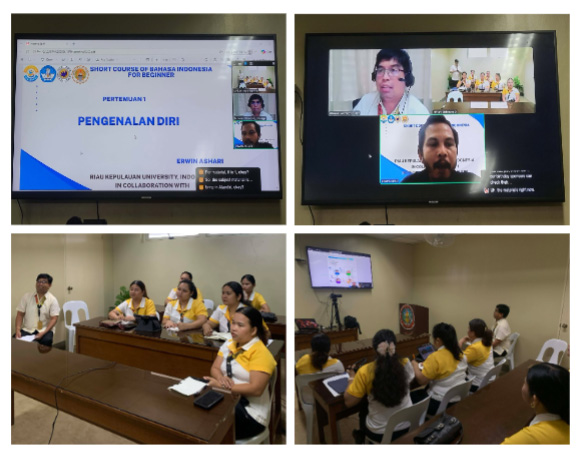
Misamis University held the Free Online Bahasa Indonesia Course 2026, a project of Universitas Riau Kepulauan in Batam, Indonesia, from April 21 to May 21, 2026. The course consisted of 10 sessions. Participants included education students majoring in English and Filipino, as well as students pursuing a Bachelor of Arts in English. The project aimed to introduce participants to basic Bahasa Indonesia, including everyday expressions and common vocabulary; develop their basic communication skills in the language; and increase their appreciation of Indonesian language and culture.
These objectives align with the participants’ curricula, which include language-related courses. The Bahasa Indonesia course also gave students opportunities to explore aspects of the language, including its phonology, morphology, syntax, and use in communication. Building on their foundational understanding, students compared linguistic features of Bahasa Indonesia with those of Filipino and other Asian languages. Through their interactions during the course, students were able to explore the language. Most importantly, they learned basic Bahasa Indonesia that they can use in simple conversations while traveling, as well as in further studies.
9. Graduate Thesis Critiquing by International Reviewers
Misamis University held a Graduate Thesis Critiquing by International Reviewers in collaboration with Universitas Persada Indonesia Y.A.I. in Jakarta, Indonesia, and Kasetsart University in Bangkok, Thailand, on May 25, 2026, from 1:00 to 4:00 p.m. Philippine Time at the Function Hall on the Misamis University campus. The project aimed to provide guidance, co-advising, and co-supervision to graduate students to strengthen the quality of their qualitative research and prepare it for publication in international, peer-reviewed journals. By sharing expertise and academic resources, the project also sought to strengthen the research culture of the participating institutions.
The activity provided an opportunity for international reviewers to share their insights and expertise in qualitative research through comments and recommendations on eight selected thesis proposals. The proposals were submitted by graduate students enrolled in Misamis University’s Master of Arts in Nursing (MAN) and Master in Nursing (MN) programs. The activity aimed to strengthen the proposals and deepen students’ understanding of qualitative research methodology, helping them produce high-quality research with greater potential for publication in peer-reviewed journals. The research critiqued consisted of qualitative studies that the participants were preparing as their final requirement for the course Qualitative Research in Nursing.
Dr. Wilhelmus Hary Susilo, a professor at Universitas Persada Indonesia Y.A.I. in Jakarta, Indonesia, and Thanapol Leangsuksant, PhD, a lecturer in the Department of Psychology, Faculty of Social Sciences, at Kasetsart University in Thailand, served as resource persons and thesis reviewers for the activity. There were eight graduate student presenters from Misamis University’s Master of Arts in Nursing (MAN) and Master in Nursing (MN) programs. Each presented a thesis proposal, which was then critiqued by the reviewers. A total of 42 MAN and MN students participated in the activity.
The activity exposed graduate students to research practices at the two collaborating institutions, including how to contextualize a research problem, select appropriate participants and sampling methods, and analyze data using NVivo. The critiquing strengthened students’ research skills and methodological understanding. In the next academic year, the students are expected to continue with supervision as they develop their proposals into full-scale studies, with the aim of pursuing collaborative publication.
10. International Conference for Social Sciences (IConSS) 2026
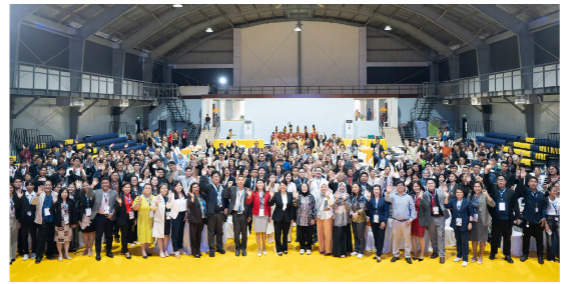
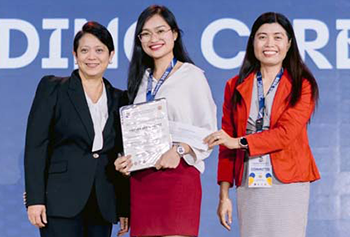
Misamis University fostered cross-sectoral dialogue through the 1st International Conference on Social Sciences (IConSS) 2026, a hybrid event scheduled for October 16–17, 2026, at the university’s HTF Activity Center in Ozamiz City. The conference addressed five themes: inclusive societies and social justice; sustainable communities and human mobility; health and human development; digital transformation and knowledge systems; and governance, inclusive economies, and sustainable development.
It brought together 177 scholars and government representatives from the Philippines and abroad. Participants presented papers onsite and online, and all papers underwent peer review.
11. MU International Exchange and Cultural Learning Program 2026
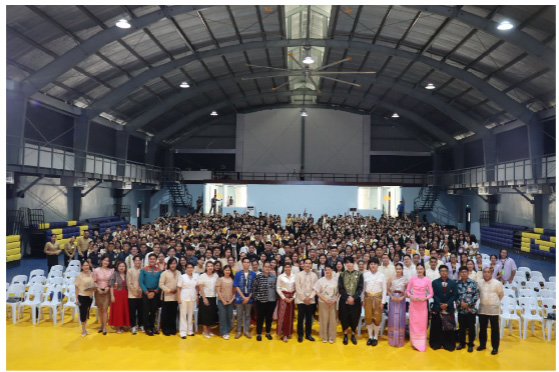
Misamis University’s International Exchange and Cultural Learning Program brought students from different countries together to learn about one another’s cultures through communication, shared experiences, and meaningful activities. The program aimed to build cultural understanding and appreciation while promoting harmony and unity among its participants. Culinary arts, national dances, and heritage were at the heart of the exchange. Through online lectures, cooking sessions, cultural visits, and community experiences, participants explored Filipino history, values, food, traditions, and local life.
The visiting participants were Aitsara Rittisakchonladet, Pattaratorn Nakphairat, Usanisa Tinnakon, and Narisa Musikun from Kasetsart University in Thailand, and Akbar Darujati Kusumo from Universitas Brawijaya in Indonesia. The program began online on June 29 with a lecture on Philippine history and values. Subsequent sessions introduced Filipino dishes, folk dances, and Philippine heritage from June 30 to July 2. After a rest day, participants departed for the Philippines on July 4. Following their arrival, participants visited Global Garden in Hoyohoy and Panguil Bridge. On July 6, the program continued with a Bisaya language drill, followed by visits to Jimenez Old Church and Asenso Misamis Occidental Resort and Aquamarine Park (AMORAP).
Culinary exchange took center stage in the following days. Participants first prepared dishes from their home countries and then cooked a Filipino dish together. The group also visited the Oroquieta Capitol Building and House of Suman in Clarin to observe how the local delicacy was made. The itinerary continued with a visit to Paglinawan Farm, where participants learned about innovative agriculture and beverage production. On July 10, participants gathered for the ASEAN + 2 Closing Program. They returned to their home countries on July 12.
By combining cultural learning with food, dance, language, and heritage, the program gave participants an opportunity to build connections across borders and deepen their appreciation of the cultures they shared.
International Collaboration for Better SDG Data, Approaches, and Student Learning
All eleven international activities, developed in collaboration with international partners, were carefully planned and scheduled. They were aligned with students’ desired learning outcomes and the 17 United Nations Sustainable Development Goals (SDGs).
The activities were planned through a collaborative process involving online meetings. The partners jointly designed the activities, reviewed outcomes, and collected and shared participant feedback to improve future initiatives. They also discussed effective approaches, efficient mechanisms and procedures, and challenges encountered in similar past activities, including how those challenges were addressed. This information helped the partners assess each activity’s success and its contribution to the relevant SDGs.
These processes facilitated the exchange of information between Misamis University and its international university partners, helping them identify ways to advance the SDGs. The collaboration also enabled the partners to compare their respective strengths and challenges. By sharing effective approaches to delivering the planned activities during online meetings, all adopted best practices to achieve the desired outcomes for students and the community and contribute further to the SDGs.

Announcement
|
|
|
Photo Gallery
 International Conference on Social Sciences 2026 |
 DR. NESTOR M. FELICIANO DAY |
 Turnover of solar energy management from WEGEN to MU |
Videos

|
|
|